
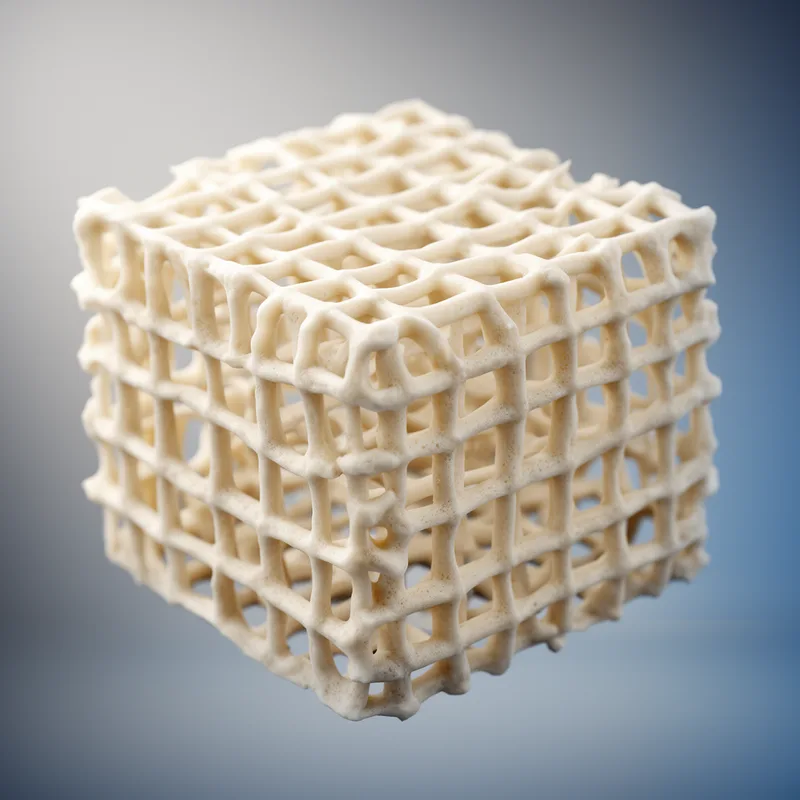
cancellate
- adjective
- /ˈkæn.sə.leɪt/
- Specialized
 :
cancellado
:
cancellado
- Under the microscope, the bone tissue appeared cancellate with numerous small spaces.
Examples
-
The sponge's skeleton has a distinctly cancellate structure, making it lightweight yet strong.
-
Certain shells display a beautifully cancellate surface, resembling delicate latticework.
-
The cancellate structure of the sponge allows it to filter water efficiently.
-
This tissue is cancellate and provides support while remaining lightweight.
-
The sponge's skeleton has a distinctly cancellate structure, making it lightweight yet strong.
-
Under the microscope, the bone tissue appeared cancellate with numerous small spaces.
-
Certain shells display a beautifully cancellate surface, resembling delicate latticework.
Synonyms


 1
9.9
1
9.9
Spongy and light with many small holes, like the inside of a bone
 1
9.6
1
9.6
A material like rock or bone that lets air and water pass through

A structure made of a network of holes like a net, as in some bones or shells

A structure like a cage with many small holes that hold other molecules

A thing that is soft and full of small holes like a sponge
How Porous

Surface Forms
Morphology
cancellate = cancell + ate
Although the form looks like 'cancel' + '-ate', the sense 'latticed, porous' is a learned Latin-derived formation (cancell-) and is not derivable from the modern English verb 'cancel'.
Etymology
The word cancellate comes from the old Latin word cancellus, which meant 'lattice' or 'small grating' and is the same root behind the common English word cancel. So, cancellate describes something like a little fence or grid — 'having a lattice or many small spaces', as in spongy bone or a shell surface.