
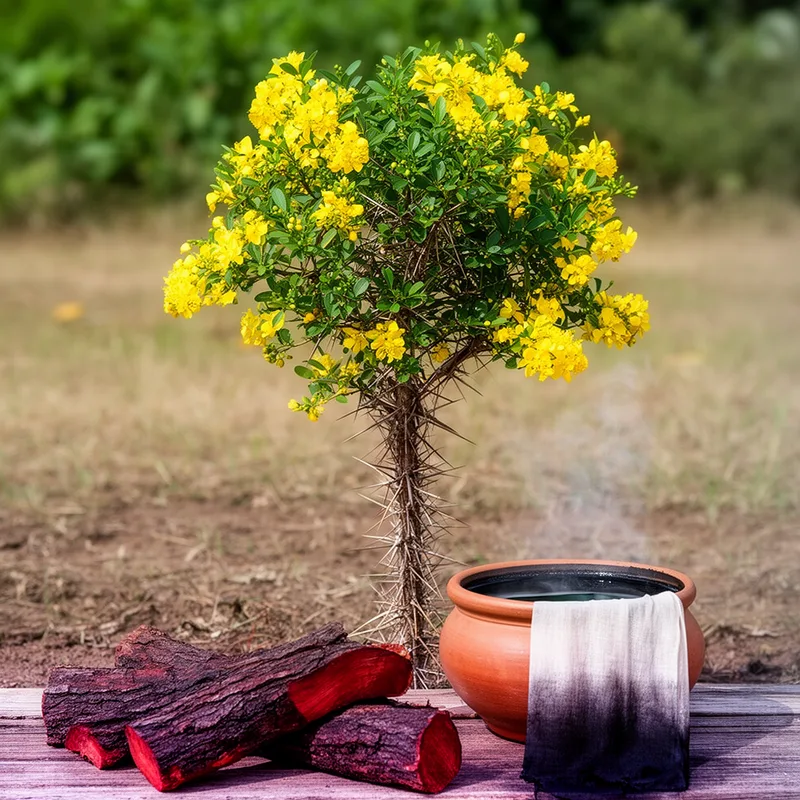
campeachy
- noun
- /ˌkæmˈpiːtʃi/
- US
- The campeachy tree is known for its vibrant yellow flowers.
Examples
-
The wood of the campeachy was highly valued for making a natural black dye.
-
In colonial times, the campeachy trade flourished thanks to the tree's use in dye production.
-
Botanists studied the campeachy for its unique heartwood and bright yellow flowers.
-
Many artisans use campeachy wood to create beautiful furniture.
-
The campeachy tree is prized for its hard wood, which is used to make quality furniture.
-
The bright yellow flowers of the campeachy shrub attract many pollinators in the garden.
-
In traditional dyeing practices, campeachy wood is often used to produce a rich black color.
Synonyms

A small tropical tree whose hard reddish-brown wood makes a black dye
A spiny shrub of Central America and the Caribbean with yellow flowers and hard inner wood for black dye
A small spiny tree from the Caribbean whose hard inner wood makes black dye

A small spiny tree from Central America and the Caribbean that people use to make dark dye
Surface Forms
Morphology
Etymology
Campeachy comes from the Spanish place name Campeche, a port in Mexico where ships carried the tree's wood for trade, and traders began calling the tree by that place. The wood was used to make a strong 'black' dye, so the place name became the name of the tree and its dye.

