

logwood tree
- noun
- /ˈlɔɡˌwʊd tri/
- UK
- The heartwood of the logwood tree is prized for creating natural black dyes.
Examples
-
The logwood tree was once a vital resource for the dye industry in the Caribbean.
-
The logwood tree has distinct bipinnate leaves and clusters of tiny yellow flowers.
-
Botanists studied the unique yellow flowers produced by the logwood tree.
-
Look at that beautiful logwood tree blooming!
-
The logwood tree is known for its vibrant yellow flowers.
-
The logwood tree is commonly used to produce a rich black dye.
-
Artisans in Central America often rely on the logwood tree for dyeing textiles.
Synonyms

A small tropical tree whose hard reddish-brown wood makes a black dye
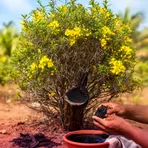
A spiny shrub of Central America and the Caribbean with yellow flowers and hard inner wood for black dye

A small spiny tree with bright yellow flowers used to make black dye

A small spiny tree from Central America and the Caribbean that people use to make dark dye
Surface Forms
Morphology
The compound is directly compositional: 'logwood' names the dye-producing plant and 'tree' denotes its growth form, so 'logwood tree' simply refers to a tree of that species. This follows a common noun+noun naming pattern that a B1 learner who knows both constituents can readily understand.
Etymology
The noun logwood tree comes from the dark, hard inner wood of the tree, which people cut into logs and boiled to make a strong 'black dye', so the name shows the tree was used to make dye.

