
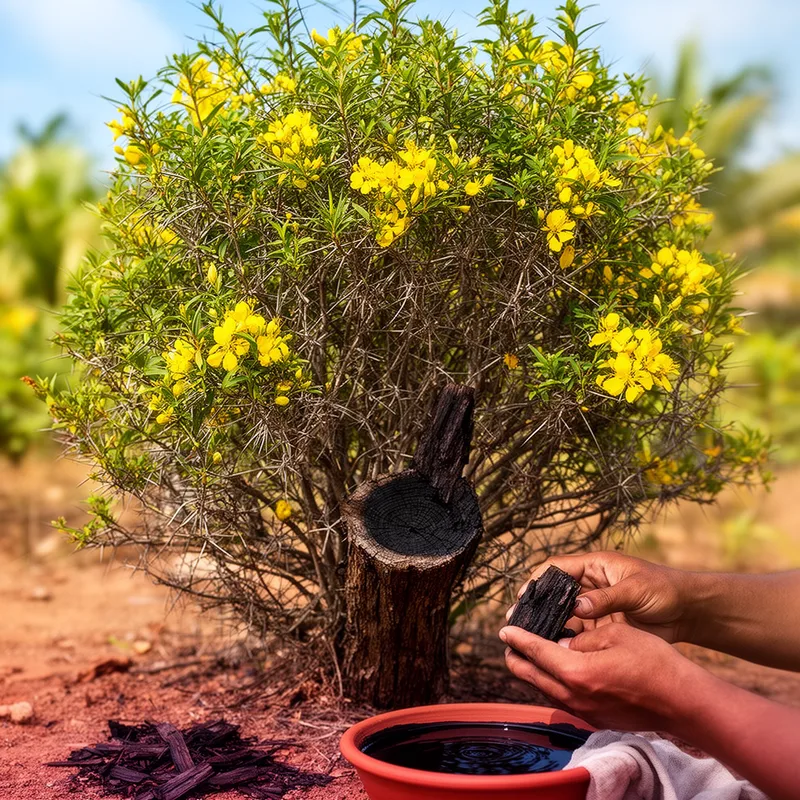
bloodwood tree
- noun
- US
- The bloodwood tree produces a heartwood prized for its use in making black dye.
Examples
-
Local artisans often use wood from the bloodwood tree to craft durable tools and instruments.
-
Bright yellow flowers appear in spring on the bloodwood tree, attracting many pollinators.
-
The bloodwood tree grows well in tropical climates.
-
Many bloodwood trees can be found in Belize.
-
The bloodwood tree has thick, spiny branches that provide shelter for various birds.
-
Artisans in the region harvest the sturdy wood of the bloodwood tree to create traditional crafts.
-
Due to its unique properties, the heartwood of the bloodwood tree is highly sought after for producing black dye.
Synonyms

A small tropical tree whose hard reddish-brown wood makes a black dye

A small spiny tree with bright yellow flowers used to make black dye

A small spiny tree from the Caribbean whose hard inner wood makes black dye

A small spiny tree from Central America and the Caribbean that people use to make dark dye
How Tall


Surface Forms
Morphology
The phrase is directly compositional: 'bloodwood' names a particular tree species (valued for deep red heartwood) and 'tree' simply classifies it as a tree, so the overall meaning is immediately derivable from its parts. This noun + tree naming pattern is a regular, cross-linguistic way to label species and would be transparent to a learner who already knows the constituent words.
Etymology
Bloodwood tree gets its name from the reddish heartwood or dark sap that people first noticed in some species. The red colour looked like blood, and because that wood was often used to make 'black dye' and hard tools, the name stuck as a simple way to remember the tree's colour and use.