
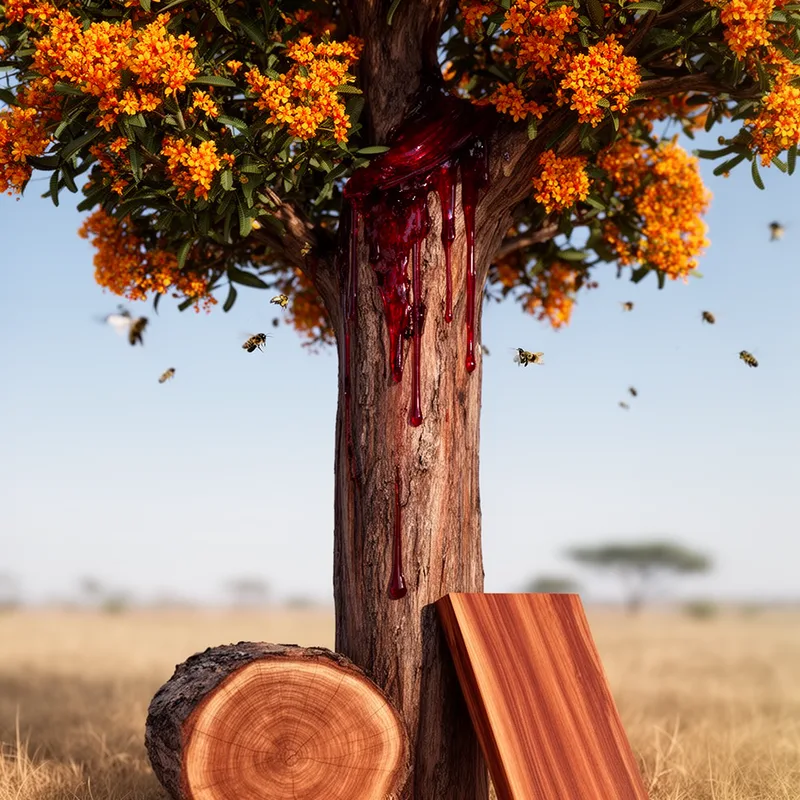
bloodwood tree
- noun
- South African
- The bloodwood tree is known for its striking red sap and durable timber.
Examples
-
The fragrant flowers of the bloodwood tree attract bees and other pollinators.
-
Carpenters often seek out bloodwood trees for high-quality furniture making.
-
The bloodwood tree is known for its striking appearance.
-
Many bloodwood trees grow in South Africa.
-
Carpenters often seek out bloodwood trees for their heavy and durable wood used in high-quality furniture.
-
The bloodwood tree produces striking orange-yellow flowers and is valued for its strong timber.
-
In South Africa, the bloodwood tree is recognized for its fragrant blooms and red sap.
Synonyms
A tree in southern Africa that loses its leaves, has orange yellow flowers, and strong wood often used for furniture

A large southern African tree with orange-yellow flowers and strong wood used for furniture

A tree with reddish wood or sap found especially in Australia and Africa
How Durable


Surface Forms
Morphology
The phrase is directly compositional: 'bloodwood' names a particular tree species (valued for deep red heartwood) and 'tree' simply classifies it as a tree, so the overall meaning is immediately derivable from its parts. This noun + tree naming pattern is a regular, cross-linguistic way to label species and would be transparent to a learner who already knows the constituent words.
Etymology
Bloodwood tree gets its name from the dark red sap that flows from the wood when the tree is cut. The red sap looks like blood, so the name links that strong image to the tree's heavy, useful wood.