

broom snakeroot
- noun
- US
- Botanists are studying the sticky leaves of broom snakeroot to understand its adaptation to arid environments.
Examples
-
Broom snakeroot is often found growing in dry, sandy soils across the American Southwest.
-
The yellow flower heads of broom snakeroot make it easy to spot in late summer.
-
The broom snakeroot thrives in arid conditions.
-
Have you seen a broom snakeroot in bloom?
-
Broom snakeroot is commonly found in rocky areas of the southwestern United States.
-
The tiny yellow flowers of broom snakeroot attract various pollinators throughout the summer.
-
Broom snakeroot can be recognized by its slender branches and sticky leaves.
Synonyms


 1
9.9
1
9.9
A low, sticky plant with narrow leaves and many small yellow flowers that grows in the US Southwest
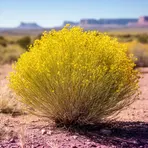
A low sticky shrub of dry land in the American Southwest with many thin branches and small yellow flowers

A low sticky bush with many small yellow flowers

A low, sticky bush with many small yellow flowers
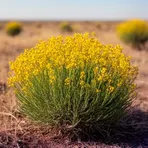
A low, sticky bush with narrow leaves and many small yellow flowers

A low, sticky plant with narrow leaves and small yellow flower heads that smells of resin
Surface Forms
Morphology
The compound reads as a type of snakeroot associated with or resembling a 'broom', so a learner who knows both nouns could infer it is a specific kind of plant (i.e. a snakeroot with broom-like qualities). However, the precise botanical properties (low-growing, sticky subshrub with narrow leaves and tiny yellow heads) are not predictable from the constituents alone, so full meaning requires prior exposure or botanical knowledge.
Etymology
Broom snakeroot may come from the plant's many thin branches that look like a broom, and from an old belief that a snakeroot could help with 'snakebite'. So the name gives a simple picture of a low, bushy plant with thin branches and roots linked to snakes, which is why we call this yellow-flowered shrub broom snakeroot.