

blastodermic vesicle
- noun
- /ˌblæstəˈdɜrmɪk ˈvɛsɪkəl/
- Specialized
- The blastodermic vesicle forms during the early stages of mammalian embryonic development.
Examples
-
Researchers observed cellular differentiation within the blastodermic vesicle under the microscope.
-
The blastodermic vesicle forms shortly after fertilization.
-
Proper implantation depends on the healthy formation of the blastodermic vesicle.
-
Researchers study the blastodermic vesicle to understand early development.
-
Researchers observed cellular differentiation within the blastodermic vesicle under the microscope.
-
The blastodermic vesicle forms during the early stages of mammalian embryonic development.
-
Proper implantation depends on the healthy formation of the blastodermic vesicle.
Synonyms

 4
9.8
4
9.8

A hollow ball of cells in early pregnancy that forms the embryo and placenta

An early stage of an embryo that is a hollow ball of cells filled with fluid
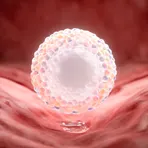
A very early embryo formed as a hollow ball of cells with fluid inside before it attaches to the uterus
Surface Forms
Morphology
The term is compositional: 'blastodermic' means relating to the blastoderm (an embryonic layer) and 'vesicle' means a small sac or bladder, so together they denote a sac or stage associated with the blastoderm. Although technical, this follows regular scientific word-formation patterns and would be predictable to a learner who knows both constituent meanings.
Etymology
Blastodermic vesicle may come from Greek and Latin words: blastoderm meaning 'sprout' and 'skin' and vesicle meaning 'small sac'. So the name gives a clear picture of a tiny, skin-like sac of early embryo cells, which is why it refers to that early stage of development.