

blastocyst
 4
9.8
4
9.8

- noun
- /ˈblæstəˌsɪst/
- Specialized
- Work on human stem cells began in 1998, motivated by the understanding that these cells from the blastocyst, the 4-5 day old embryo, had not yet differentiated and thus could potentially become any cell in the human body.
- cells from a blastocyst
- blastocyst stage
- status of a blastocyst
Loading YouTube…
Watch on YouTubeNow beyond the blastocyst, we've chosen to use stem cells to begin to understand the function of these genes.
- Now beyond the blastocyst, we've chosen to use stem cells to begin to understand the function of these genes.
Examples
-
Human embryonic stem cell research should be conducted in full awareness that the research material is derived from a living human blastocyst and that, in fact, we are using this human tissue as a means to an end: improved health care and possible cures.
Academic text (2001) -
By the end of the first week, the free-floating ball of cells, now known as a blastocyst, has entered the uterus.
-
Well, to what that raises the question of how you can actually get a blastocyst, how you can make a blastocyst like this.
-
The blastocyst must be treated with respect appropriate to early human embryonic tissue.
Academic text (2001) -
At this primitive blastocyst stage, they have no identifiable organs.
Academic text (2001) -
A few days after that, the blastocyst implants in the uterine lining.
Blog text (13) -
We need to distinguish the moral status of a blastocyst or embryo from that of an implanted fetus.
Academic text (2001) -
A fertilized egg undergoes cell division, becoming a mass of cells called a blastocyst after 5 days.
-
A human blastocyst is an embryo 0.1 to 0.2 millimeters in diameter, round like a soccer ball.
Synonyms

An early stage of a mammal embryo when some cells start to become different
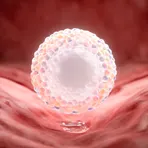
A very early embryo formed as a hollow ball of cells with fluid inside before it attaches to the uterus
How Advanced
- Specialized

 1
9.3
1
9.3

- Specialized
1
9.0
- Specialized
4
9.8
- Specialized
27
4.0
Surface Forms
Morphology
blastocyst = blasto + cyst
The term 'blastocyst' is a specialized scientific term not easily decomposed into recognizable English morphemes for most learners.
Etymology
Blastocyst comes from Greek parts blastos ('bud') and kystis ('bladder' or 'sac'), and you can see the same 'sac' idea in the English word cyst. So it literally names a tiny 'bud' inside a 'sac', which fits the hollow ball of cells that will become the embryo and its supporting tissues.