
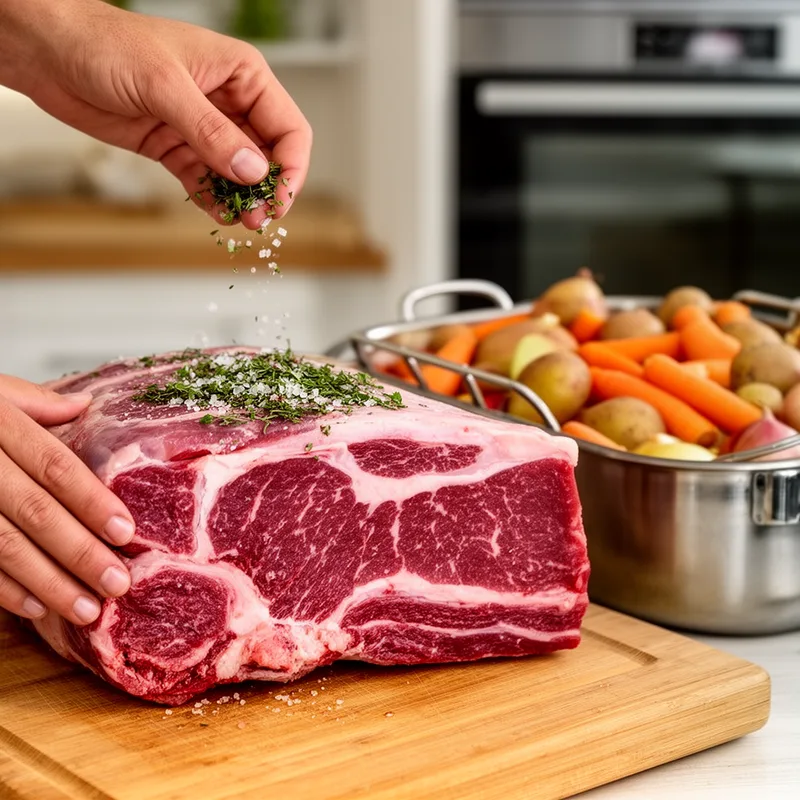
blade roast
- noun
- /bleɪd roʊst/
- US
- When shopping for beef, he looked for a well-marbled blade roast.
Examples
-
The chef recommended a blade roast for making a tender pot roast.
-
I bought a blade roast for dinner.
-
She cooked the blade roast slowly to bring out its full flavor.
-
The blade roast was tender and flavorful.
-
The recipe called for a tender blade roast, perfect for slow cooking.
-
She seasoned the blade roast with herbs before placing it in the oven.
-
After marinating, the blade roast turned out juicy and flavorful.
Synonyms
 197
1.0
197
1.0

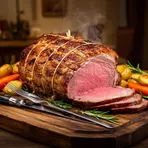
A large piece of meat cooked for slicing and serving
 46
2.1
46
2.1
A piece of meat sliced from an animal for cooking
 44
5.3
44
5.3
A cut of meat from the upper front leg of an animal like a pig
 6
2.7
6
2.7
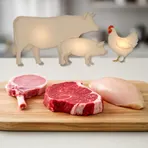
A piece of meat taken from a certain part of an animal
 3
6.5
3
6.5
A cut of beef from near the cow's shoulder used for slow cooking
 1
1.3
1
1.3
A large piece of beef cooked in an oven and served as a main dish
How Tender

Surface Forms
Morphology
The noun-noun compound combines 'blade' (a shoulder-derived cut of meat) with 'roast' (a cut of meat prepared for roasting), so the meaning—a roast taken from the blade/shoulder—is directly compositional from its parts. This is a common descriptive naming pattern cross-linguistically, so a B1 learner who knows both constituents would readily infer the MWE's meaning.
Etymology
Blade roast comes from the meat near the animal's blade (the shoulder) and the word roast, a 'cut' cooked slowly in the oven. So blade roast today means the shoulder 'cut' meant for roasting.