
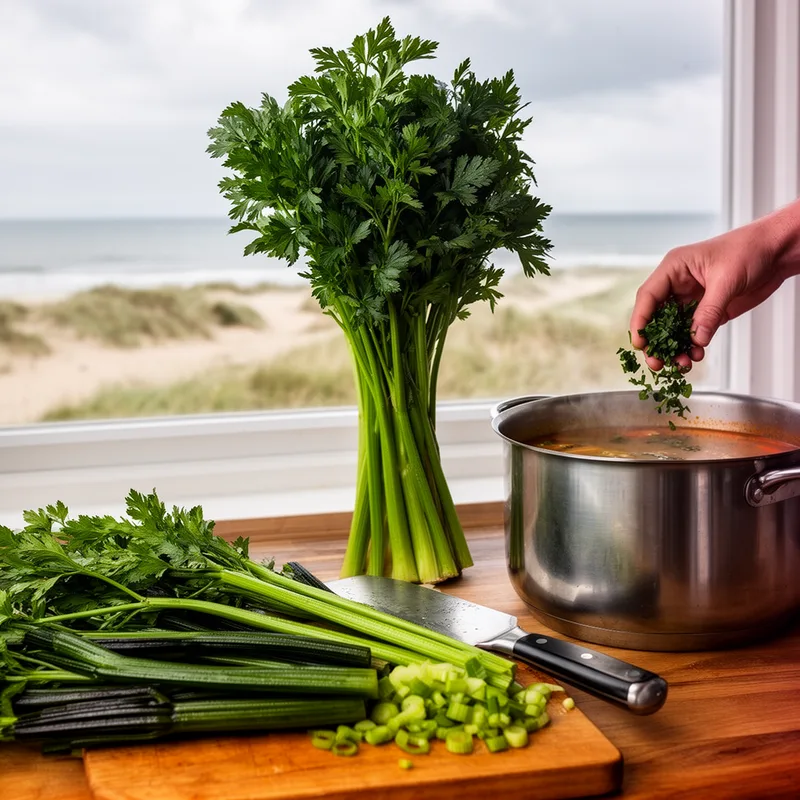
black lovage
- noun
- UK
- Gardeners sometimes cultivate black lovage as an alternative to celery in cooking.
Examples
-
She added chopped black lovage to the soup for extra flavor.
-
Black lovage thrives in the sandy soils near the British coastline.
-
I found some fresh black lovage at the market.
-
The recipe calls for black lovage as a seasoning.
-
Gardeners sometimes cultivate black lovage as an alternative to celery in cooking.
-
She added chopped black lovage to the soup for extra flavor.
-
The recipe calls for black lovage as a seasoning.
Synonyms

A European herb with leaves like celery eaten as a vegetable
A leafy green plant like celery that people eat

A leafy herb like celery used as a vegetable and to add flavor
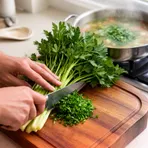
A European herb like celery that people use to flavor food
Surface Forms
Morphology
This is a straightforward adjective + noun composition: 'black' modifies 'lovage', so the phrase denotes a type or variety of lovage associated with the quality 'black' (e.g., darker-colored or a named variety). Such compositional, descriptive patterns are standard cross-linguistically, so a B1 learner who knows both words can infer the MWE's meaning.
Etymology
Black lovage may come from the herb's dark leaves and the old word lovage, a cooking plant 'like celery' used to add flavor. So the name paints a simple picture of a dark-leaved cooking herb found near the coast, which is why it refers to that plant today.

