
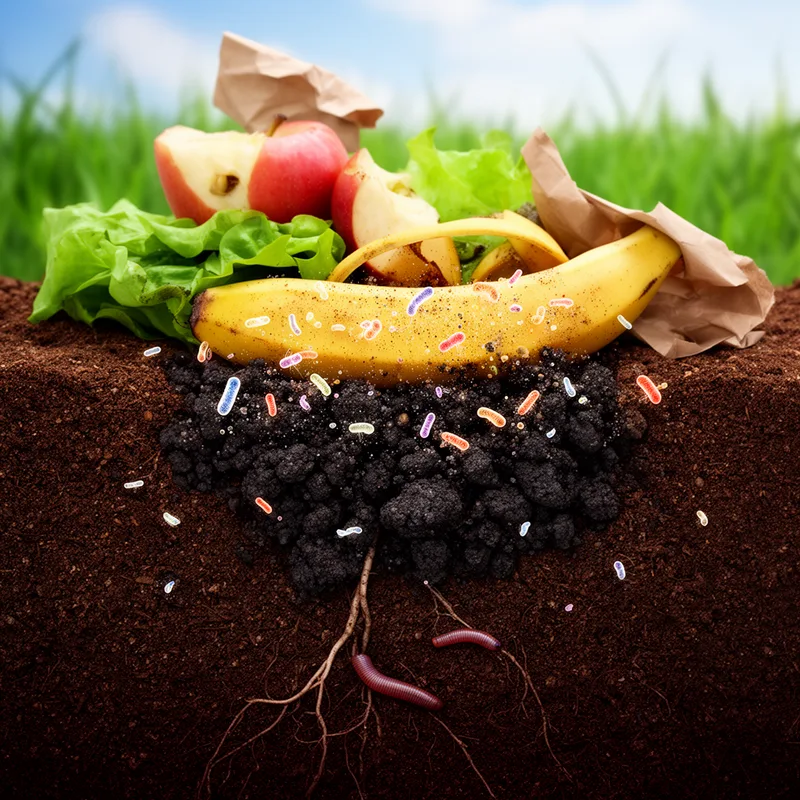
biodegradation
 1
4.6
1
4.6

- noun
- /ˌbaɪoʊdɪˈɡreɪdəʃən/
- Specialized
- biodegradation rate
Examples
-
Unfortunately, however, they often end up in landfills, and they are not agreeable to quick biodegradation.
Blog text (11) -
Bioremediation involves the same microorganisms that cause the slow, natural biodegradation of chemicals in the environment.
Academic text (1991) -
Bioreactor treatment is an effective means of optimizing the factors, such as pH, temperature, and nutrient concentration, which affect the biodegradation rate.
Academic text (1995) -
Based on the contributions of researchers cited above, a continuation of the science of wood biodegradation is now the challenge of the yard waste composting and mulch-making community.
Academic text (2000) -
In a report for the U.S. Grains Council, Eiichi Takeshita writes that the products degrade within a year in soil, and that the biodegradation process was accelerated to 50 days when starch was added.
Academic text (1998) -
Compostability of a product relies on three main characteristics, according to Ramani Narayan, who is familiar with the initiative: full and complete biodegradation; disintegration during the composting process; and no effect on compost quality.
Academic text (1995) -
The process of biodegradation helps clean up oil spills by allowing bacteria to break down the oil into harmless materials.
-
Understanding biodegradation is essential for developing environmentally friendly packaging that decomposes naturally.
-
Natural biodegradation occurs when living organisms such as bacteria break down waste into simpler components.
Synonyms
 24
1.6
24
1.6
The breaking down of things like food or wood by bacteria and mold
 23
5.3
23
5.3
Breaking dead plants and animals into simpler material by bacteria and fungi
 22
3.4
22
3.4
To rot and break down because of bacteria and fungi
 19
4.1
19
4.1
A process in which a substance is broken into simpler parts by chemicals or living things
 3
3.4
3
3.4
The breaking down of dead plants and animals by bacteria or fungi
Surface Forms
Morphology
biodegradation = biodegrade (transparent) = bio + degrade + ation
The noun is formed regularly from the verb 'biodegrade' with the suffix '-ation', and the meaning is recoverable from its parts.
Etymology
Biodegradation comes from bio- meaning 'life' and degrade meaning 'break down', so it literally points to 'life breaking down'. That's why biodegradation describes how living things like bacteria and fungi turn materials into simpler, natural parts, like nature's recycling.