
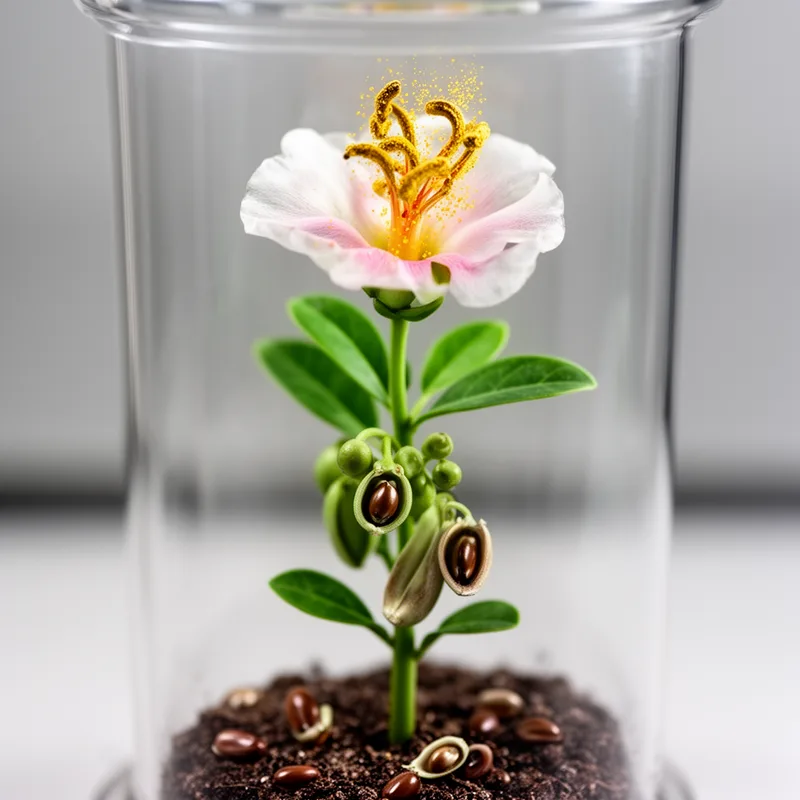
autogamic
- adjective
- /ˌɔːtəˈɡæmɪk/
- Specialized
- An autogamic plant can reproduce without a mate.
Examples
-
Some species of flowers are autogamic and do not require pollinators.
-
Some species of grass are naturally autogamic, relying on self-pollination to reproduce.
-
Researchers studied the autogamic mechanisms that ensure self-fertilization in certain flowers.
-
The plant's autogamic nature allows it to thrive even in isolated environments.
-
Researchers studied the autogamic mechanisms that ensure self-fertilization in certain flowers.
-
The plant's autogamic nature allows it to thrive even in isolated environments.
-
Some species of grass are naturally autogamic, relying on self-pollination to reproduce.
Synonyms
A plant or flower that can make seeds without pollen from another plant

A plant that can use its own pollen to make seeds without pollen from another plant
How Self-Fertilizing

Surface Forms
Morphology
Etymology
Autogamic has auto- at the start meaning 'self' and -gamic from a word for 'marriage', like in monogamy. So an autogamic plant 'marries' itself and can fertilize without another plant, which is why the word means 'self-fertilizing'.

