
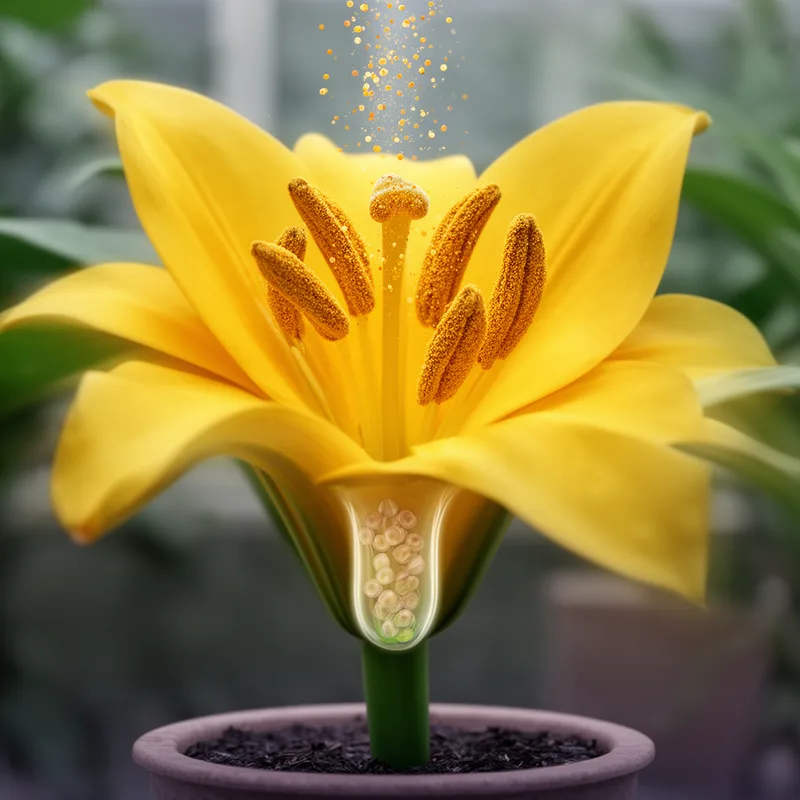
autogamy
- noun
- /ˌɔːtəˈɡæmi/
- Specialized
- In autogamy, self-pollination ensures that a single plant can produce seeds.
Examples
-
The study explored how autogamy affects genetic diversity in wildflowers.
-
Some species of plants rely on autogamy to reproduce in isolated environments.
-
Many plants exhibit autogamy as a reproductive strategy.
-
Does this species rely on autogamy for reproduction?
-
In autogamy, self-pollination allows a single plant to produce viable seeds without the need for pollen from other plants.
-
Some flowering plants, such as certain orchids, utilize autogamy to ensure their reproductive success in isolated habitats.
-
Research on autogamy reveals its significant role in maintaining plant populations in environments with limited pollinator access.
Synonyms

A flower making seeds using its own pollen
When a plant or animal uses its own sperm and eggs to make young

A plant or group that fertilizes itself to make offspring
Antonyms

- Specialized
Fertilization of a plant by pollen from a different plant of the same species
How Self-Fertilizing
- Specialized

- Specialized
Surface Forms
Morphology
autogamy = auto + gam + y
The meaning is directly compositional ('self' + reproductive union/fertilization), but the classical elements are not highly familiar everyday English morphemes for many learners.
Etymology
The word autogamy comes from the Greek parts auto- 'self' and -gamy 'marriage'. So, autogamy is like a 'self-marriage' in plants, meaning a flower or plant fertilizes itself.

