
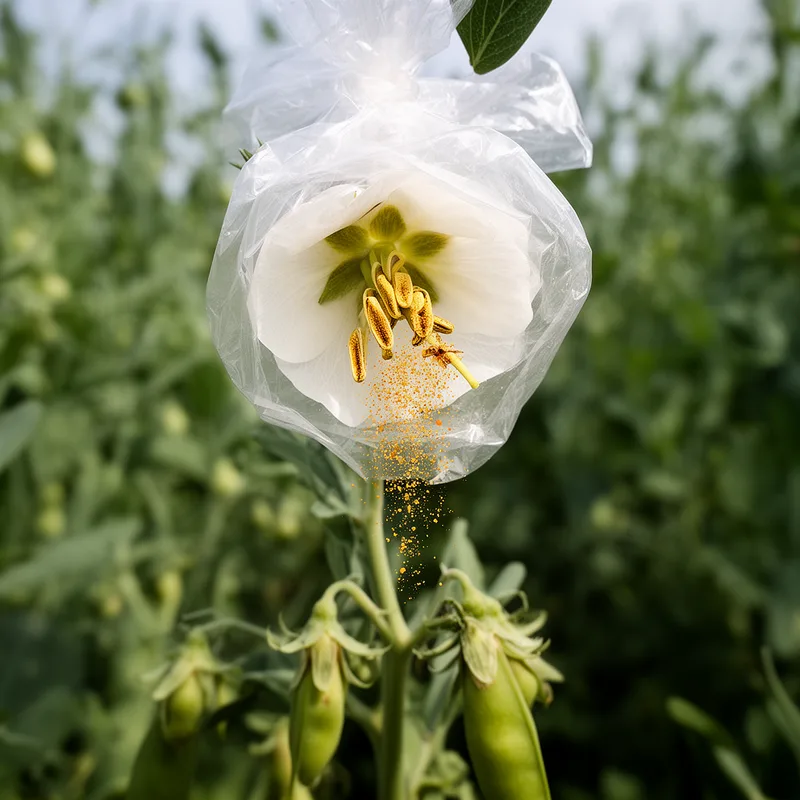
selfing
- adjective
- /ˈsɛlfɪŋ/
- Specialized
- Many crops have selfing varieties that do not require pollinators to reproduce.
Examples
-
A selfing population can quickly become genetically uniform over several generations.
-
The researchers selected selfing plants to ensure genetic consistency in the experiment.
-
The selfing plants can thrive in isolated environments.
-
Many species exhibit selfing as a reproductive strategy.
-
Researchers often cultivate selfing strains to maintain specific genetic traits in their plants.
-
The selfing varieties of beans do not need external pollen for fertilization.
-
In gardening, choosing selfing plants can lead to faster growth and higher yields.
Synonyms


 1
5.8
1
5.8
Able to make seeds using pollen from the same plant, not from another plant

A living thing that makes new life using its own pollen or sperm without help from another
A plant or flower that can make seeds without pollen from another plant

A plant that can use its own pollen to make seeds without pollen from another plant
Antonyms

How Self-Fertilizing
- Specialized

- Specialized
Surface Forms
Morphology
selfing = self (semi-transparent) = self + ing
The adjective is transparently related to the verb self, but the botanical sense remains specialized rather than broadly guessable.
Etymology
Selfing (adjective) is built from self ('the same person or thing') and -ing (showing action or result). So a selfing plant or line is one that reproduces by fertilizing 'itself' or was produced that way.