
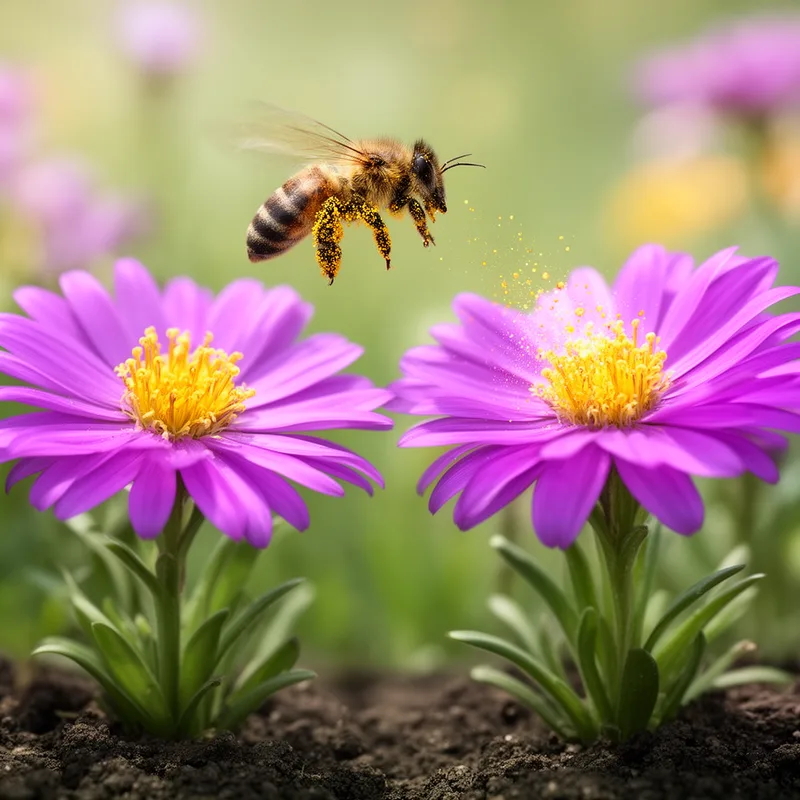
allogamy
- noun
- /əˈlɒɡəmi/
- Specialized
- The study examined factors influencing allogamy versus self-pollination in wildflowers.
Examples
-
In agricultural practice, allogamy can result in hybrid vigor among crop plants.
-
Certain species rely on allogamy to promote genetic diversity within their populations.
-
The process of allogamy is crucial for genetic diversity.
-
Many plants rely on allogamy to reproduce effectively.
-
Certain species rely on allogamy to promote genetic diversity within their populations.
-
In agricultural practice, allogamy can result in hybrid vigor among crop plants.
-
The study examined factors influencing allogamy versus self-pollination in wildflowers.
Synonyms

Pollen moving from one flower to another to make seeds
Antonyms
How Self-Fertilizing
- Specialized

- Specialized
Surface Forms
Morphology
allogamy = gamy (semi-transparent) = allo + gamy
The parts 'allo-' (other) + '-gamy' (marriage/union) transparently convey 'mating with another individual' to those familiar with scientific combining forms, but the term is technical and the combining forms are not common for average learners.
Etymology
Allogamy comes from Greek parts allo- meaning 'other' and -gamy meaning 'marriage', the same root you see in monogamy and polygamy. So allogamy is like a 'marriage' between different plants — fertilization by pollen from another plant of the same kind, which gives more variety in their offspring.

