
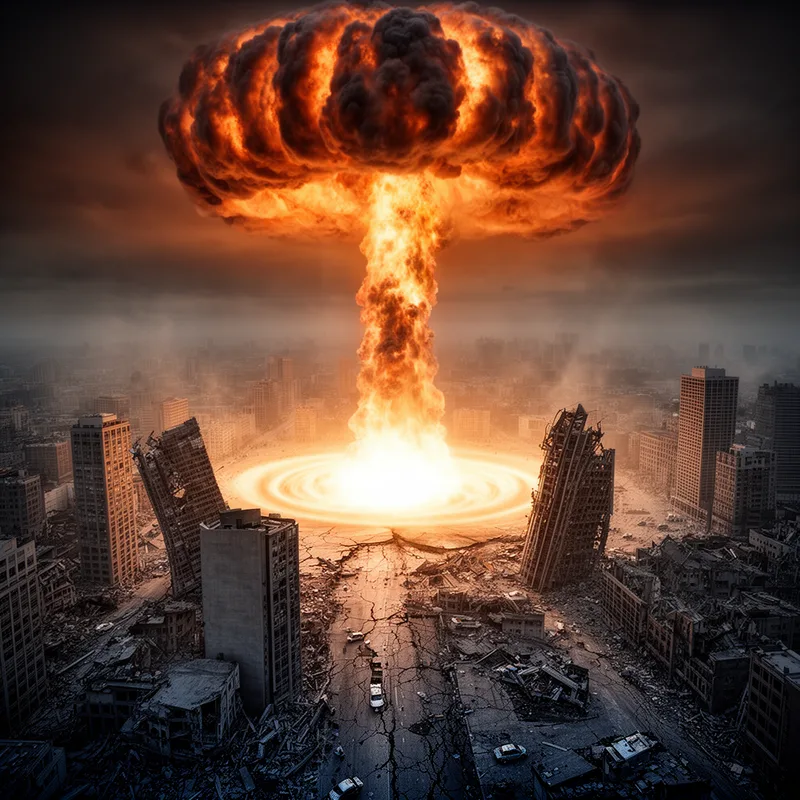
atomic explosion
 3
4.2
3
4.2

- noun
- /əˈtɑːmɪk ɪkˈspləʊʒən/
- Specialized
 :
explosión atómica
:
explosión atómica
- This is a spectrograph of a normal atomic explosion.
Examples
-
The first atomic explosion occurred during the Trinity test in 1945, marking a pivotal moment in history.
-
After the atomic explosion, the landscape was forever changed, with devastation spread across the region.
-
In an atomic explosion, class, look for this sign.
-
There was no atomic explosion.
-
It is their second atomic explosion.
Fiction book (1992) -
On April 22, 1952, Americans watched the first televised live broadcast of an atomic explosion.
Academic text (2016) -
The stated purpose of Operation Crossroads was to measure the impact of atomic explosions on naval vessels.
Academic text (2016) -
Just one month earlier, Hanford had produced the plutonium for the world's first atomic explosion, the Trinity bomb test at Alamogordo, New Mexico.
Academic text (1990) -
The idea was born from the inquiry into the possibility of constructing a two-stage atomic bomb, in which an initial atomic explosion would cause a secondary sphere of fissionable material to implode and detonate.
Academic text (1996) -
Thousands of spectators gathered to witness the atomic explosion, eager to see the power of nuclear technology.
Synonyms
 ∞
2.8
∞
2.8
A sudden violent burst that makes a loud noise and causes damage
 297
3.0
297
3.0
A sudden strong explosion that breaks things
 85
6.7
85
6.7
A sudden violent explosion from a chemical or nuclear reaction
 9
2.5
9
2.5
A sudden explosion from a bomb
 8
4.1
8
4.1
A very large explosion caused by a nuclear reaction, like an atomic bomb
 1
6.0
1
6.0
A sudden violent explosion that destroys things nearby

A very sudden powerful blast that breaks things and makes loud noise
How Destructive
- Specialized

 1
6.9
1
6.9

- Specialized
3
4.2
∞
2.8
- Specialized
85
6.7
Surface Forms
Morphology
The meaning is directly compositional: 'atomic' specifies the type/cause of the 'explosion' (relating to nuclear/atomic energy), so the combined phrase denotes an explosion caused by atomic means. This adjective+noun pattern is straightforward and cross-linguistically common, so a B1 learner who knows both words should be able to infer the MWE's meaning.
Etymology
Atomic explosion comes from the idea of breaking open the very small parts of matter called atoms, letting the energy inside burst out. That image of many tiny parts exploding at once explains why the phrase means a very large, destructive blast.