

atherosclerosis
 6
7.4
6
7.4

- noun
- /ˌæθəroʊskləˈroʊsɪs/
- Specialized
- To prevent atherosclerosis, it is important to maintain a healthy diet and exercise regularly.
- carotid atherosclerosis
- coronary atherosclerosis
- risk of atherosclerosis
Loading YouTube…
Watch on YouTubeWhat we really mean to say is that HDLS do not 'cause atherosclerosis, LDLS do.
- What we really mean to say is that HDLS do not 'cause atherosclerosis, LDLS do.
- There is no ambiguity that APOB is causally related to atherosclerosis.
- Otherwise he just wrote in his conclusion all these men had atherosclerosis equal to that of old American men.
- But the oils injure the artery walls and they and they increase the risk of the atherosclerosis formation.
Examples
-
Most kids by age 10 in the US already have fatty streaks in their arteries the first stage of atherosclerosis leading to heart attacks, strokes.
-
If left untreated, atherosclerosis can lead to serious cardiovascular issues.
-
Diabetes is a risk factor for arterial atherosclerosis.
Academic text (2012) -
These people if they're untreated, will develop atherosclerosis in their teens.
-
The favorable effect of activity on retarding the progression of atherosclerosis has been demonstrated by many investigators.
Academic text (1996) -
Accelerated atherosclerosis is a major cause of morbidity and mortality in inflammatory rheumatological disease.
Academic text (2014) -
Slice through an artery showing a thick deposit of atheroma (top) caused by atherosclerosis in coronary heart disease.
Academic text (2011) -
The doctor explained that atherosclerosis is caused by fatty buildups in the arteries.
Synonyms
 1
7.4
1
7.4
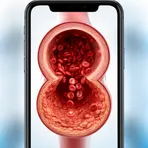
A condition in which artery walls become thick and stiff, reducing blood flow
 1
3.6
1
3.6
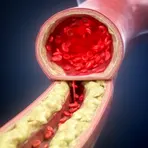
The walls of blood vessels become thick and hard, causing less blood to flow
 1
5.6
1
5.6
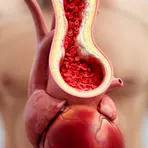
Hardening and thickening of artery walls that reduces blood flow from the heart
How Severe


Surface Forms
Morphology
Etymology
Atherosclerosis comes from Greek parts athero- meaning 'gruel' or 'paste' and sclerosis meaning 'hardening'. So the word pictures fatty paste that hardens on the artery walls, making them narrow and blocking blood flow.