

asthenic
- adjective
- /æˈsθɛnɪk/
- Specialized
- After weeks of illness, she felt asthenic and unable to lift even a small bag.
Examples
-
The asthenic child struggled to keep up with his peers during physical activities.
-
His asthenic appearance made him appear fragile and delicate in comparison to others.
-
The following is an example, given by Lobaczewski, of the thought pattern of a person who seems a typical and severe case of asthenic psychopathy:
Blog text (2) -
These people, asthenic and hypersensitive, do not indicate the same glaring deficit in moral feeling and ability to sense a psychological situation as it appears in essential psychopathy.
Blog text (2) -
The most frequently indicated and known type is the asthenic psychopath, which appears in every conceivable intensity, from barely perceptible to an obvious pathologic deficiency.
Blog text (2) -
Other psychopathies—asthenic, schizoidal, anankastic, hysterical, et al.—definitely play second fiddle, although in sum they are much more numerous.
Blog text (2)
Synonyms

 52
4.1
52
4.1

Being physically weak and breaking easily
 40
4.2
40
4.2
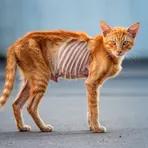
Very thin and weak in a way that looks unhealthy
 1
7.0
1
7.0
Very weak and lacking energy because of illness or injury
 1
7.0
1
7.0
Very thin person with little or no fat


 1
7.6
1
7.6
Feeling very weak and having little energy

Physically weak and without energy, often after an illness

Having a thin, narrow body shape

Having a long thin body
Antonyms


Compounds

How Strong

Surface Forms
Morphology
asthenic = asthenia (semi-transparent) = asthen + ic
The adjective is formed regularly from the noun 'asthenia' (weakness) with the productive adjectival suffix '-ic'.
Etymology
Asthenic comes from Greek parts a- 'without' and sthen- 'strength', and you can see the connection to the English word 'strength'. So asthenic literally means 'without strength', which is why it describes someone who is physically weak or very thin.