
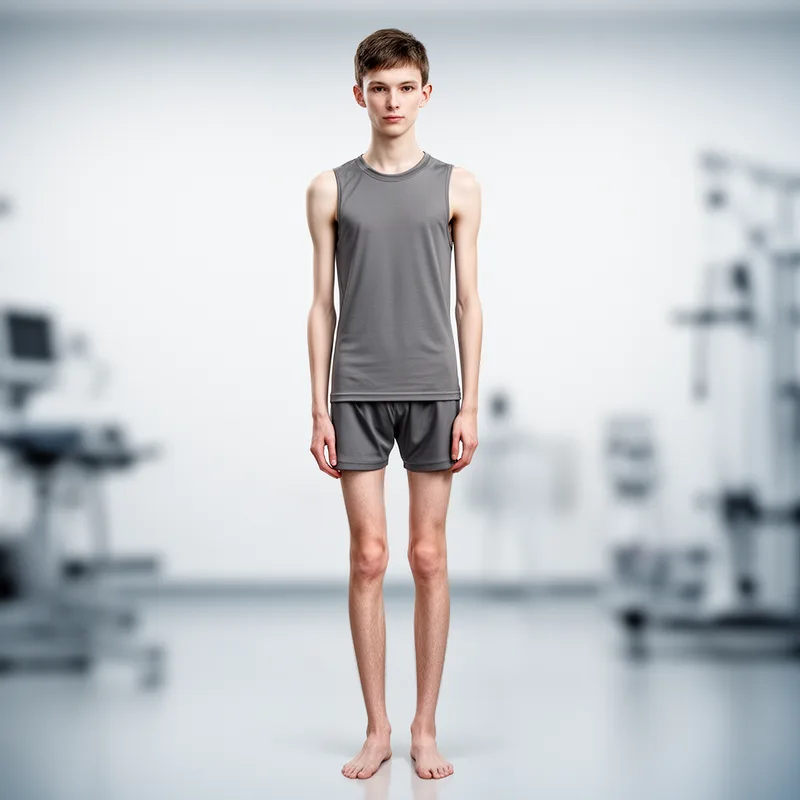
asthenic type
- noun
- /æˈsθɛnɪk taɪp/
- Specialized
- The patient was described as having an asthenic type physique during the medical examination.
Examples
-
Medical textbooks often refer to the asthenic type when discussing variations in human body structure.
-
Athletes with an asthenic type may excel in endurance sports due to their light frame.
-
The patient was classified as having an asthenic type of physique.
-
Many athletes do not fit the asthenic type due to their muscular builds.
-
Medical textbooks often refer to the asthenic type when discussing variations in human body structure.
-
The patient was described as having an asthenic type physique during the medical examination.
-
Athletes with an asthenic type may excel in endurance sports due to their light frame.
Synonyms

 11
3.6
11
3.6

The shape and build of a person's body, like thin or muscular
 1
9.4
1
9.4
A person with a naturally thin, lean body and little fat or muscle
A naturally thin body type with long limbs and little body fat
Antonyms


Surface Forms
Morphology
This is a straightforward adjective + noun composition: 'asthenic' (weak, slender) modifying 'type' (a class), so the phrase simply denotes a body type characterized by being asthenic. The meaning is directly derivable from the constituent meanings and follows regular adjective–noun composition found across languages, so a learner who knows the two words can infer the MWE.
Etymology
Asthenic type comes from old Greek words that mean 'without strength' — a- meaning 'without' and sthenos meaning 'strength'. So it describes a very thin, light body and explains why doctors use the phrase for a 'slender, weak' build.