

apomixis
- noun
- /ˌæpəˈmɪksɪs/
- Specialized
- Apomixis is a form of reproduction where plants can produce seeds without apomixisation.
Examples
-
Together with his colleagues, Stebbins led the way in showing the importance of hybridization, polyploidy, and apomixis in plant evolution, and by force of the significance of their theories and publications the importance of hybridization and polyploidy in biological systems in general.
Academic text (1999) -
See "Apomixis."
Academic text (1994) -
Farmers have long dreamed of breeding apomixis into all major crops, says Kindiger.
Academic text (1997) -
"By luck, we found the aerenchyma trait to be strongly associated with the same chromosome that carries the gene for apomixis."
Academic text (1997) -
"I hadn't heard of aerenchyma until last year, but the aerenchyma angle represents a good spin-off to our apomixis research."
Academic text (1997) -
"Apomixis allows corn to reproduce seed clonally, causing seed to breed true from year to year and enabling farmers to maintain high-yielding varieties indefinitely," says Kindiger.
Academic text (1997) -
Some species use apomixis to ensure their offspring are genetically identical to the parent.
-
In plants like dandelions, apomixis allows for the production of seeds without any male contribution.
Synonyms
 1
9.9
1
9.9

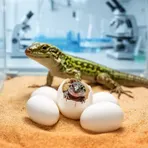
An egg grows into a new animal or plant without being fertilized

 1
4.6
1
4.6
A way of making new living things from one parent without sex that makes identical copies

A way an egg grows into a new animal or plant without being fertilized

Development of an embryo without fertilization in some plants like ferns

Reproduction that happens without sex cells joining in some plants and animals
Antonyms

Surface Forms
Morphology
Etymology
The word apomixis comes from the Greek parts apo- meaning 'away from' and mixis meaning 'mixing', and you can see the same idea in the English word mix. So, apomixis means reproduction 'without mixing', making seeds or young without fertilization.