

anti-inflammatory drug
 3
3.4
3
3.4

- noun
- /ˌænti ɪnˈflæməˌtɔri drʌg/
- Specialized
- For patients who do not respond to acetaminophen, nonsteroidal anti-inflammatory drugs (NSAIDs) are generally the next treatment option.
- nonsteroidal anti-inflammatory drug
- steroidal anti-inflammatory drug
- NSAID - nonsteroidal anti-inflammatory drug
Examples
-
Special attention was paid to the avoidance of aspirin or non-steroidal anti-inflammatory drugs affecting platelet function.
Academic text (1992) -
To manage postoperative pain, patients were instructed to take aspirin or a nonsteroidal anti-inflammatory drug and to drink cold beverages.
Academic text (2008) -
Avoid the use of nonsteroidal anti-inflammatory drugs.
Academic text (2007) -
About 75% of women in both groups took non-steroidal anti-inflammatory drugs for a month or longer during the study.
Academic text (1996) -
Use of non-steroidal anti-inflammatory drugs also reduces the expected decline.
Academic text (2003) -
Oral nonsteroidal anti-inflammatory drugs (NSAIDs) are the basis of effective treatment for back pain.
Academic text (2005) -
If nonsteroidal anti-inflammatory drugs (NSAIDs) are inadequate, consultation with a pain management service is often appropriate.
Academic text (1996) -
Ideally, patients who are taking acetylsalicylic acid, a nonsteroidal anti-inflammatory drug, or warfarin would stop their medication prior to any biopsy or injection.
Academic text (2004) -
Adjunctive drug therapy may include over-the-counter agents such as nonsteroidal anti-inflammatory drugs (NSAIDs) and simple analgesics.
Academic text (2004) -
Doctors often prescribe anti-inflammatory drugs to help reduce swelling after surgery.
Synonyms
 194
1.9
194
1.9
A medicine that reduces pain, fever, and swelling and lowers the risk of blood clots
 121
3.9
121
3.9
A medicine that reduces swelling or helps build muscle
 23
3.2
23
3.2
A medicine that eases pain, reduces swelling, and lowers fever
 13
5.3
13
5.3
A man-made medicine that reduces swelling and weakens the immune system
 4
3.5
4
3.5
A medicine that lowers pain, fever, and swelling without using steroids
 3
3.8
3
3.8
A medicine that reduces pain and swelling, often used for arthritis and muscle pain
 3
8.4
3
8.4
A medicine that reduces swelling and lowers the body's immune response
 1
3.5
1
3.5
A medicine that reduces swelling and pain in the body
 1
4.7
1
4.7
A drug that reduces pain and swelling by blocking a specific enzyme
 1
4.0
1
4.0
A medicine that reduces pain and swelling without steroids
 1
6.3
1
6.3
A medicine that reduces pain, fever, and swelling, often for arthritis
 1
4.7
1
4.7
A common medicine for pain, fever, and inflammation called aspirin


 1
4.1
1
4.1
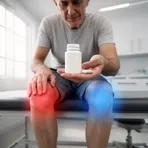
A medicine that reduces pain and swelling without steroids, like ibuprofen or aspirin
 1
7.8
1
7.8
A medicine that reduces pain and swelling
 1
9.9
1
9.9
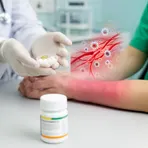
A medicine that reduces pain and swelling in animals, often used for horses and formerly for people
 1
6.9
1
6.9
A medicine that reduces swelling and calms the immune system

A medicine that reduces pain and swelling in joints, often for arthritis

A medicine that reduces pain and swelling used for arthritis

A medicine that reduces joint pain and swelling, used for arthritis

A medicine that reduces pain and swelling in arthritis

A medicine that reduces pain and swelling, often for arthritis

A medicine that reduces pain and swelling in arthritis

A medicine that reduces pain and swelling in arthritis and other conditions that cause swelling

A medicine that reduces pain and swelling, used for arthritis

A drug formerly used to treat arthritis by reducing joint swelling and pain

A medicine that reduces pain and swelling, often used for arthritis

A medicine that blocks a protein that causes inflammation, used for diseases like rheumatoid arthritis

A medicine that treats rheumatoid arthritis by reducing white blood cells that cause inflammation
How Strong
- Specialized
3
3.4

- Specialized
1
4.1
Surface Forms
Morphology
anti-inflammatory + drug
The phrase is directly compositional: 'anti-' (against) + 'inflammatory' (relating to inflammation) + 'drug' (medicine) yields a medicine that counteracts inflammation. The parts map transparently onto the definition and similar morphological patterns exist across many languages, so a B1 learner who knows the constituents can infer the meaning.
Etymology
The term anti-inflammatory drug comes from its parts: anti means 'against', inflammatory is about 'swelling' in the body, and drug means 'medicine', so picture a medicine that fights swelling like a small firefighter. So, it means 'a medicine that reduces swelling'.