
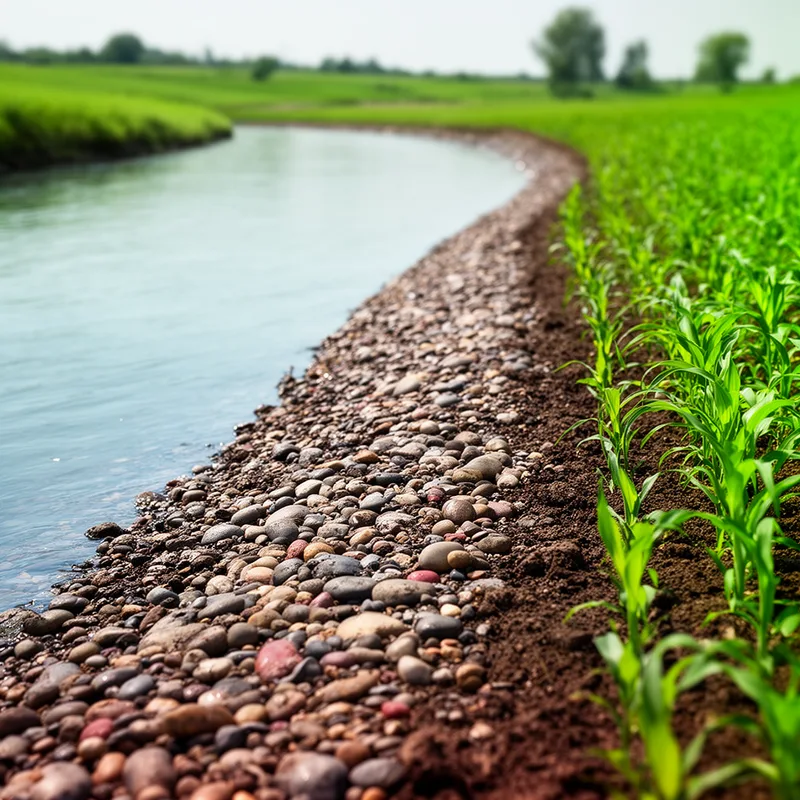
alluvial
 3
7.6
3
7.6

- adjective
- /əˈluːviəl/
- Specialized
 :
aluvial
:
aluvial
- Farmers and town dwellers who had invaded the alluvial lands of the Mississippi called for control by levees.
- alluvial soil
- alluvial plain
- alluvial valley
Examples
-
The Mississippi alluvial floodplain extends into eastern Arkansas, forming the Delta region, wherein Craighead County is located.
Academic text (2009) -
The narrow river valleys common in these highlands are in contrast to the broad alluvial streams of the Coastal Plain.
Academic text (2012) -
The best conditions were provided by cities that were built at sea level on alluvial porous soil.
-
Below the hard layer of gravel, the alluvial sand was soft and easily dug.
Fiction book (2001) -
A large pagoda forest grew along the base of the rugged alluvial fan.
Fiction book (2001) -
The area near Mutare holds a vast reservoir of alluvial industrial diamond deposits.
Academic text (2010) -
Mountainous as it is, Arcadia does have some valleys silted up with alluvial soil.
Academic text (1998) -
Fortunately, they'd recently entered a flatter terrain of moraines and alluvial wash.
Fiction book (2002) -
Floodplain marsh, found adjacent to streams, has primarily sandy alluvial soils that are frequently inundated by river flooding.
Academic text (2010) -
Much of Southern Louisiana is a vast, low alluvial plain created by the Mississippi River.
Synonyms


 1
8.6
1
8.6
To happen in rivers or be made by rivers
Compounds

- Specialized
1
7.5
A fan-shaped area of sand and stones that forms where a fast stream slows and spreads at a mountain base


- Specialized
A wide fan of sand and stones that forms when a fast river slows at a mountain base



- Specialized
Fine earth left by rivers that is soft and very good for growing crops
Surface Forms
Morphology
Etymology
Alluvial comes from Latin parts: the prefix ad- means 'to' and the root luere means 'to wash', so the original idea is 'washed toward'. That's why alluvial describes soil and deposits that rivers have 'washed' and left behind on their banks.