
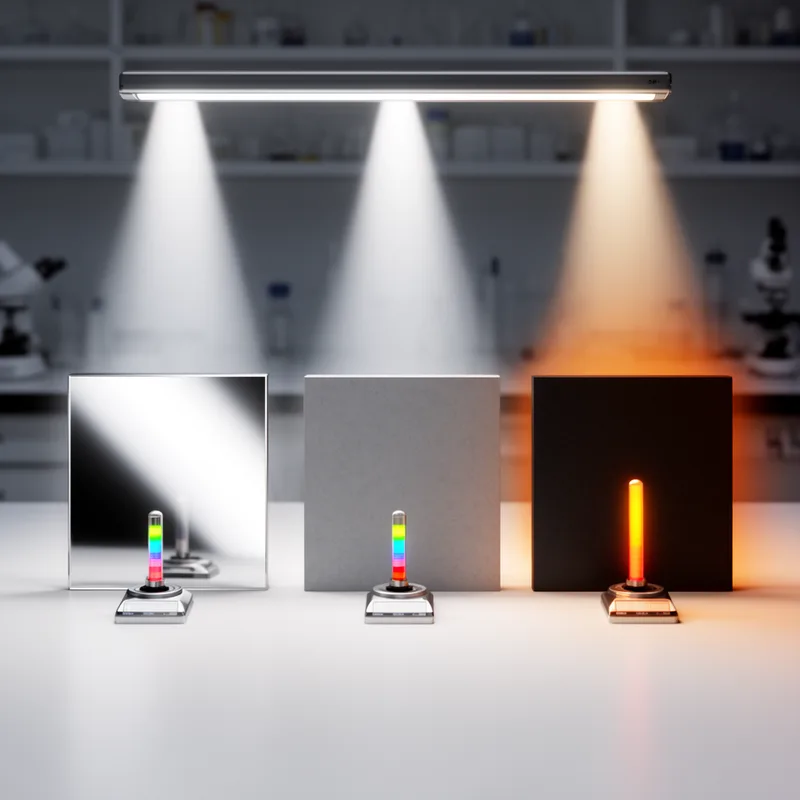
absorptivity


 1
8.9
1
8.9
- noun
- /æbˈzɔːrpˌtɪvɪti/
- Specialized
- Higher absorptivity rates in materials lead to more effective insulation against heat loss.
Loading YouTube…
Watch on YouTubeSo I'm not going to take you through that, but you know, you can measure the intensity, the molar absorptivity or whatever you want that is related to this.
- So I'm not going to take you through that, but you know, you can measure the intensity, the molar absorptivity or whatever you want that is related to this.
Examples
-
As seen in Fig. 5, there is a good agreement between the predicted absorptivity and experimental measurements.
Academic text (2018) -
Consider how the interior of an igloo could be at +18°C with minimal heating if the interior walls had an absorptivity of about 1.
Blog text (18) -
A high absorptivity would make an igloo more or less the equivalent of a sub-zero cool store.
Blog text (18) -
It is not widely known that the radiation spectrum applies per the absorptivity at each wavelength.
Blog text (28) -
W's argument only applies if the absorptivity and emissivity (albedo) of the planet's surface are identical.
Blog text (18) -
It means absorptivity and hence also emissivity should be low—well below 1.
Blog text (18) -
Additionally, the energy absorptivity (formula omitted) is dependent on the material, electron beam acceleration voltage, and local incidence angle.
Academic text (2018) -
The magnitude of CO2 and water vapor emissivity and absorptivity are the same; however, the concentration of CO2 (0.04%) is much less than that of water (1%) in the atmosphere.
Blog text (22) -
The absorptivity of the solar panel determines how much sunlight it can convert into energy.
-
Researchers measured the absorptivity of different paints to find which reflects the most sunlight.
Synonyms
A number that shows how much incoming light or sound a material absorbs

How much light and heat a material takes in rather than reflects or passes through
Antonyms

How Absorbent
- Specialized
1
8.9

- Specialized
- Specialized
1
7.4
3
4.8
Surface Forms
Morphology
absorptivity = absorptive (transparent) = absorb + ive + ity
Formed by adding '-ity' to 'absorptive' (itself 'absorb' + '-ive'), so the property meaning is directly derived.
Etymology
Absorptivity comes from absorb + -ivity, and absorb originally meant 'to suck in' or 'to soak up' — like a sponge taking in water. So, absorptivity is a measure of how well a material 'soaks up' light, heat, or sound.