

Sambucus nigra
- noun
- UK
- The dark berries of Sambucus nigra are often harvested to make elderberry wine.
Examples
-
Local traditions use extracts from Sambucus nigra flowers for homemade cordials and teas.
-
Sambucus nigra is commonly found along hedgerows and woodlands throughout Europe.
-
The Sambucus nigra plant thrives in moist, fertile soil.
-
Many people use Sambucus nigra for its medicinal properties.
-
Sambucus nigra, known as European black elder, produces dark berries that can be used to make jams and jellies.
-
In traditional herbal medicine, Sambucus nigra is often utilized for its ability to boost the immune system.
-
You can find Sambucus nigra growing wild in many parts of Europe, particularly near rivers and in shaded areas.
Synonyms


 1
5.5
1
5.5
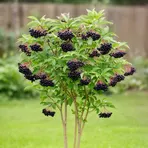
A small tree or bush that has clusters of dark purple berries

A common shrub or small tree with clusters of dark berries used for making jam and wine
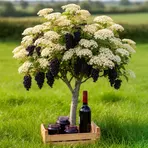
A small tree with groups of white flowers and black berries used to make wine and jam

A small tree or bush that has dark berries used to make wine and jam

A small tree or bush with white flower clusters and dark berries used to make jam

A small tree or shrub that has white flowers and small dark berries
Surface Forms
Morphology
Sambucus + nigra
This is a botanical Latin binomial formed from the genus name 'Sambucus' (a plant genus) plus the epithet 'nigra' meaning 'black', so a learner who knows both constituents can compose the meaning as the 'black elder' species. Although 'nigra' is a Latin form and may be unfamiliar to many learners, the construction is descriptive and therefore directly derivable from its parts.
Etymology
Sambucus nigra comes from an old word for a small string instrument called 'sambuke' because people once made that instrument from elder wood, and nigra means 'black' for the tree's dark berries. So the name gives a simple picture of the elder tree and its black fruit.