
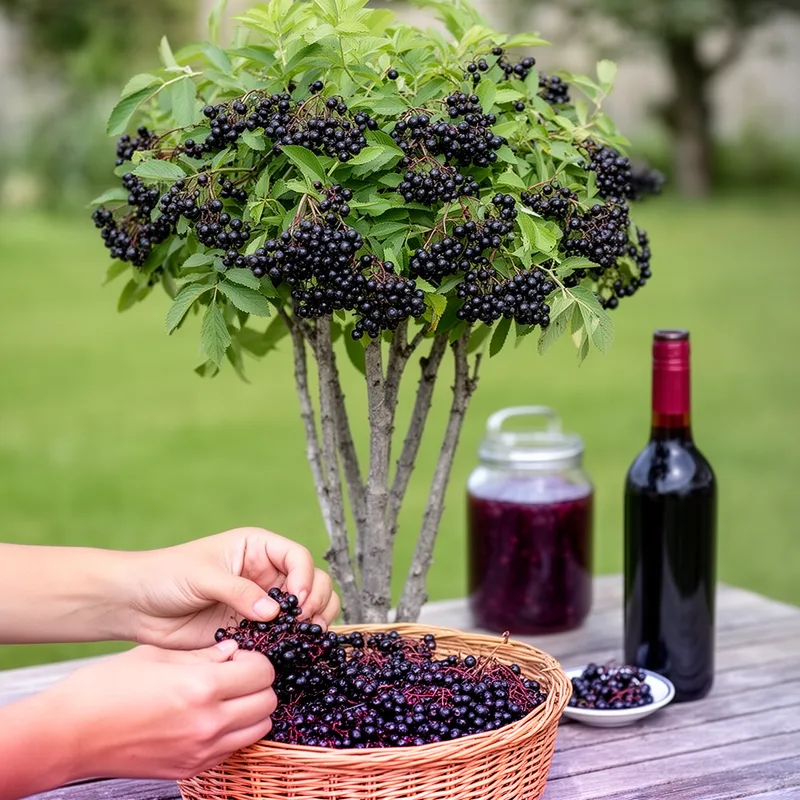
European elder
- noun
- UK
- The berries of the European elder are often used to make wine and jam.
Examples
-
Scientists are studying extracts from the European elder for potential health benefits.
-
Last summer, we planted a European elder in our backyard for its beautiful flowers.
-
The European elder is known for its medicinal properties.
-
Many European elders grow in the wild across Europe.
-
The berries of the European elder are often used to make wine and jam.
-
Scientists are studying extracts from the European elder for potential health benefits.
-
Last summer, we planted a European elder in our backyard for its beautiful flowers.
Synonyms

 6
5.6
6
5.6

A small tree with white flowers that makes dark berries

 1
5.5
1
5.5
A small tree or bush that has clusters of dark purple berries

A common shrub or small tree with clusters of dark berries used for making jam and wine

A small tree or bush with white flower clusters and dark berries used to make jam
A small tree with groups of white flowers and black berries used to make wine and jam

A small tree or bush whose dark berries people use to make wine and jams

A small tree or shrub that has white flowers and small dark berries
Surface Forms
Morphology
The meaning is directly compositional: 'European' specifies geographic origin and 'elder' names the Sambucus shrub, so a learner who knows both words can infer it denotes an elder plant from Europe. This modifier+noun pattern is common cross-linguistically and follows standard English composition, making the phrase readily understandable to B1 learners.
Etymology
European elder may come from an old word for 'fire' because people used the tree's hollow stems like 'pipes' to blow on flames. That's why the word elder named the tree, and today European elder simply means the elder tree from Europe, known for its white flowers and dark berries used to make wine and jam.