
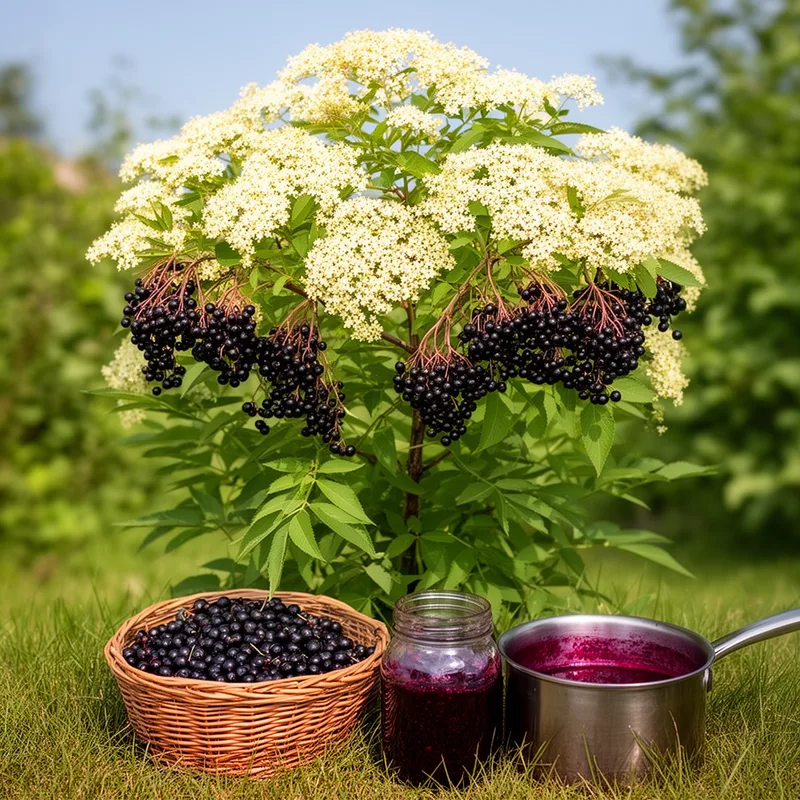
common elder
- noun
- /ˈkɑːmən ˈɛldər/
- UK
- In late summer, the common elder is known for its clusters of dark berries that are often harvested for wine.
Examples
-
The common elder is known for its medicinal properties.
-
The common elder is valued for its medicinal properties and culinary uses.
-
Clusters of black fruit hang from the branches of the common elder.
-
We harvested common elder berries in late summer to make jam.
-
You can find common elders in many gardens across Europe.
-
The common elder produces small white flowers that attract various pollinators in the garden.
-
Many people enjoy making jelly from the black berries of the common elder during the summer.
Synonyms


 1
5.5
1
5.5
A small tree or bush that has clusters of dark purple berries

A common shrub or small tree with clusters of dark berries used for making jam and wine
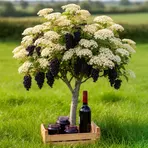
A small tree with groups of white flowers and black berries used to make wine and jam

A small tree or bush that has dark berries used to make wine and jam

A small tree or bush whose dark berries people use to make wine and jams
Surface Forms
Morphology
The phrase is a straightforward noun phrase where 'common' (widespread/ordinary) simply modifies 'elder' (the Sambucus shrub). A B1 learner who knows both constituent meanings can derive that it refers to the ordinary/widespread elder plant, so the meaning is fully compositional and predictable.
Etymology
Common elder refers to a familiar shrub with flat clusters of white flowers that turn into dark berries used to make jams, wines and simple medicines. Because people have long used its flowers and berries for food and home remedies, the name came to mean this particular shrub.