
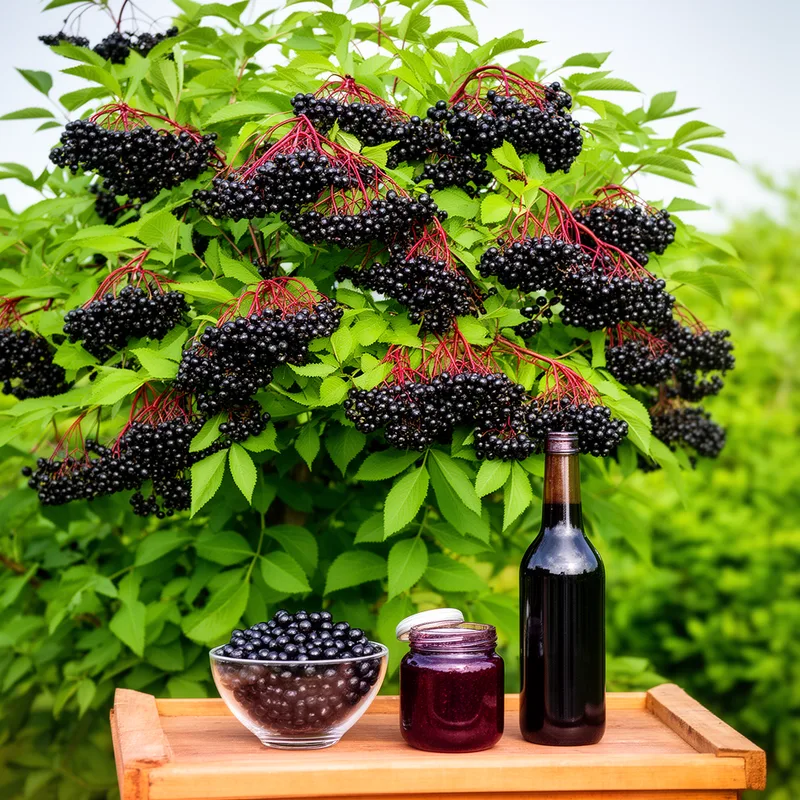
black elder
- noun
- /blæk ˈɛldər/
- UK
- Traditionally, people have used black elder berries to make cordials and medicinal syrups.
Examples
-
The black elder in the garden was full of ripe, dark berries.
-
I found some black elder berries while hiking in the woods.
-
A hedgerow of black elder provided shade and food for birds.
-
The black elder tree is known for its medicinal properties.
-
In late summer, we harvested juicy clusters of black elder berries from the garden to make homemade jam.
-
The old cottage was surrounded by a tall hedge of black elder, where birds eagerly feasted on its dark fruits.
-
During our picnic, we enjoyed sweetened drinks made with black elder flowers that we gathered from the nearby shrubs.
Synonyms

 6
5.6
6
5.6

A small tree with white flowers that makes dark berries

 1
5.5
1
5.5
A small tree or bush that has clusters of dark purple berries
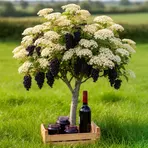
A small tree with groups of white flowers and black berries used to make wine and jam

A small tree or bush whose dark berries people use to make wine and jams

A small tree or bush that has dark berries used to make wine and jam

A small tree or bush with white flower clusters and dark berries used to make jam

A small tree or shrub that has white flowers and small dark berries
Surface Forms
Morphology
The phrase is a straightforward adjective + noun composition where 'black' specifies a variety of 'elder' (the Sambucus shrub) — a learner who knows both words can infer it refers to the elder plant with black berries. This kind of descriptive plant name follows common compositional patterns across languages, so the meaning is directly derivable from its parts.
Etymology
Black elder is named for its dark berries and the tree itself. The word black points to the nearly black fruit and elder is the name of the shrub, and because people long used those berries to make 'wine' and 'syrup', the name now refers to the shrub with dark berries.