
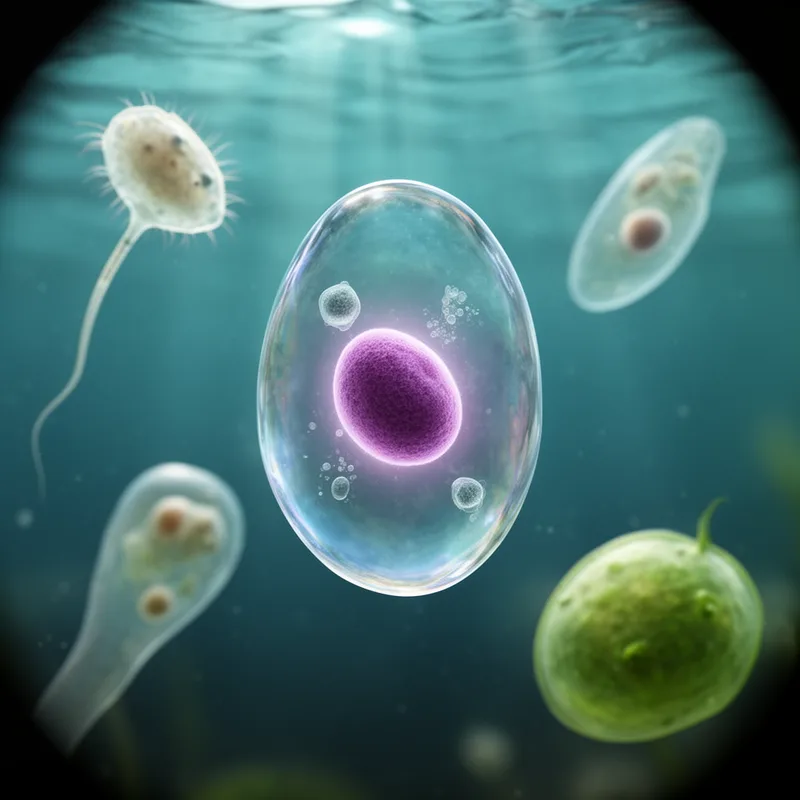
Protista
 1
8.9
1
8.9

- noun
- /prəˈtɪstə/
- Specialized
- In biology class, we learned about the different kingdoms, particularly focusing on Protista and its unique characteristics.
- the kingdom Protista
Examples
-
Scientists study Protista to better understand the diversity of eukaryotic life forms.
-
Although he had considered this possibility in 1959, Whittaker made the more conservative decision to include the bacteria as a subkingdom of the Protista.
Academic text (2012) -
The addition of Kingdom Protista to Whittaker's original three-kingdom scheme highlighted another major difference between his ecological approach and Copeland's taxonomic approach.
Academic text (2012) -
Similarly, although most textbook authors have abandoned the polyphyletic kingdom Protista, they continue to devote a chapter to "protists."
Academic text (2012) -
Despite misgivings about Whittaker's kingdom Protista, Curtis now endorsed the five-kingdom system as the best alternative for understanding the general contours of biodiversity.
Academic text (2012) -
He was now willing to relegate unicellular algae and cyanobacteria to his new kingdom, Protista, but Whittaker continued to place all multicellular producers in kingdom Plantae.
Academic text (2012) -
The Kingdom Protista includes various types of single-celled organisms, such as protozoa and some algae.
Synonyms

A group of living things including single-celled creatures and algae, not plants or animals

A group of mainly single-celled living things like algae and protozoa that are not plants or animals

A group of mostly single-celled living things with cells that have a nucleus, like slime molds and some algae
Compounds
- Specialized
A group of mostly single-celled living things with cells that have a nucleus, like slime molds and some algae
Surface Forms
Morphology
Etymology
Protista comes from the Greek root protos meaning 'first', and you can see the same proto- in prototype. So Protista names the 'first' or simple living things; many are single-celled and do not fit with plants, animals, or fungi, which is why scientists put them in their own group.