
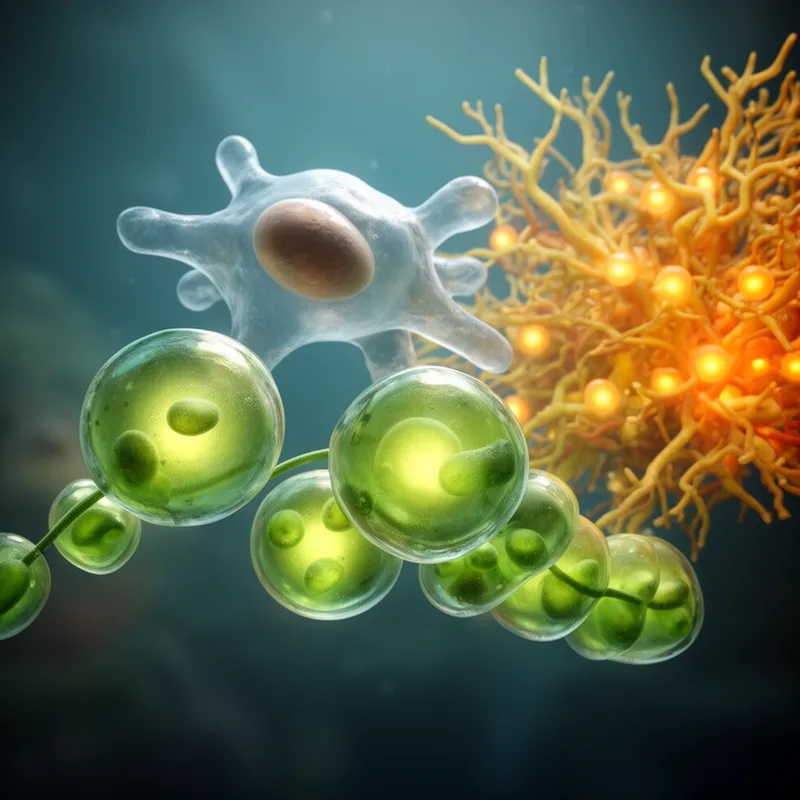
division Protista
- noun
- /dɪˈvɪʒən prɒˈtɪstə/
- Specialized
- Slime molds, formerly grouped in division Protista, exhibit characteristics of both fungi and amoebae.
Examples
-
Some eukaryotic algae belong to division Protista rather than the plant kingdom.
-
Biologists once classified a wide variety of microbes under division Protista, though this system has since evolved.
-
The division Protista includes various types of algae.
-
Some scientists study the division Protista for its unique characteristics.
-
Researchers categorize certain microorganisms, such as protozoa and slime molds, within division Protista.
-
Organisms in division Protista are primarily unicellular and differ significantly from plants and animals.
-
The study of division Protista helps scientists understand the diversity of life forms in aquatic ecosystems.
Synonyms
 1
8.9
1
8.9

A mostly single-celled living thing with a nucleus, like protozoa or some algae, different from plants, animals and fungi

A group of living things including single-celled creatures and algae, not plants or animals

A group of mainly single-celled living things like algae and protozoa that are not plants or animals
Surface Forms
Morphology
The phrase is a straightforward taxonomic label combining 'division' (a rank/category) with 'Protista' (the named group of organisms), so the meaning — the taxonomic division called Protista — is directly compositional. Although somewhat technical, this noun–noun naming pattern is standard in biology and common across languages, so a B1 learner who knows the constituent meanings would likely understand it.
Etymology
Division Protista comes from Protista, a word meaning 'first' in Greek. Scientists used division to mean a group of simple, mostly single-celled living things, so the name helps explain why it refers to basic microbes that are not plants, animals, or fungi.