
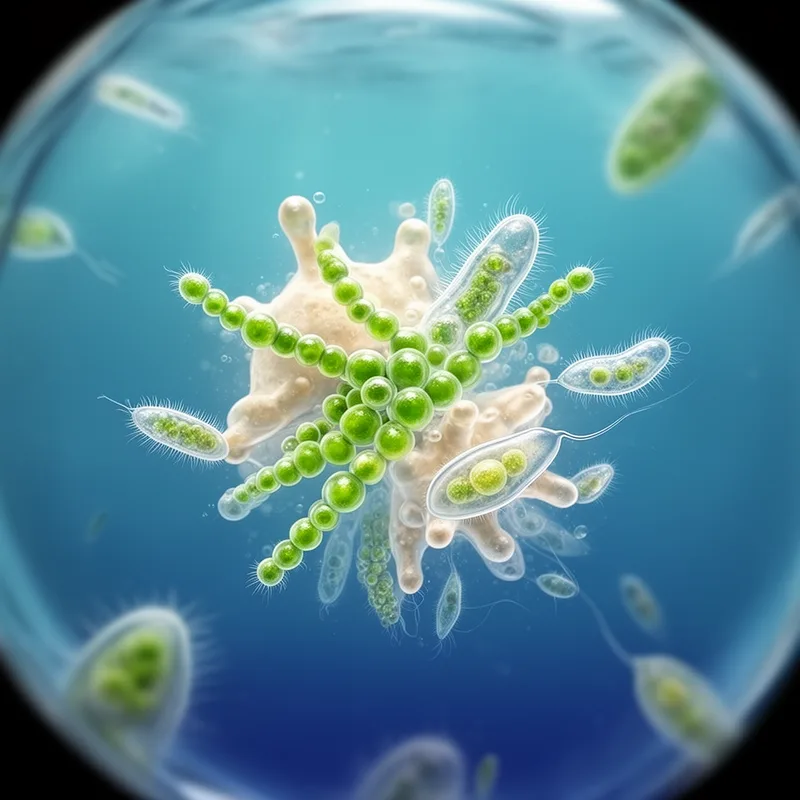
kingdom Protoctista
- noun
- /ˈkɪŋdəm ˌproʊtoʊkˈtɪstə/
- Specialized
- Combining the fungi, various algae, protozoans, slime molds, and other organisms that lacked true tissues made the kingdom Protoctista very heterogeneous.
Examples
-
Whittaker was particularly critical of Copeland's decision to include the fungi, red and brown algae, and numerous groups of microscopic eukaryotes in the kingdom Protoctista.
Academic text (2012) -
In biological classification, the kingdom Protoctista contains all protists, which are distinct from both plants and animals.
-
From Whittaker's perspective, Copeland's kingdom Protoctista badly failed this criterion.
Academic text (2012) -
Copeland chose to group the fungi with other "lower" eukaryotic organisms that lacked tissues in his kingdom Protoctista.
Academic text (2012) -
According to Whittaker, the evidence against this earlier claim undercut both the traditional grouping of fungi within the plant kingdom and Copeland's decision to combine the fungi with various algae in his kingdom Protoctista.
Academic text (2012) -
The kingdom Protoctista includes diverse organisms such as algae and protozoa.
-
Scientists study the kingdom Protoctista to understand the characteristics of microscopic organisms like slime molds.
Synonyms
 1
8.9
1
8.9

A mostly single-celled living thing with a nucleus, like protozoa or some algae, different from plants, animals and fungi

A group of living things including single-celled creatures and algae, not plants or animals
Surface Forms
Morphology
The phrase is a straightforward taxonomic label combining the rank 'kingdom' with the group name 'Protoctista'; if a learner knows 'kingdom' and the meaning of 'Protoctista' (a distinct kingdom of protists), the overall meaning is directly derivable. This compositional naming pattern is standard in biological classification and therefore transparent to learners who know the constituents.
Etymology
Kingdom Protoctista comes from old Greek words proto ('first') and ctista ('created'), so the name suggests 'first-created' life. That's why the term is used for simple, early organisms like algae and protozoa that do not fit neatly into plants or animals.