
Pliocene


 1
9.9
1
9.9
- noun
- /ˈplaɪoʊsiːn/
- Specialized
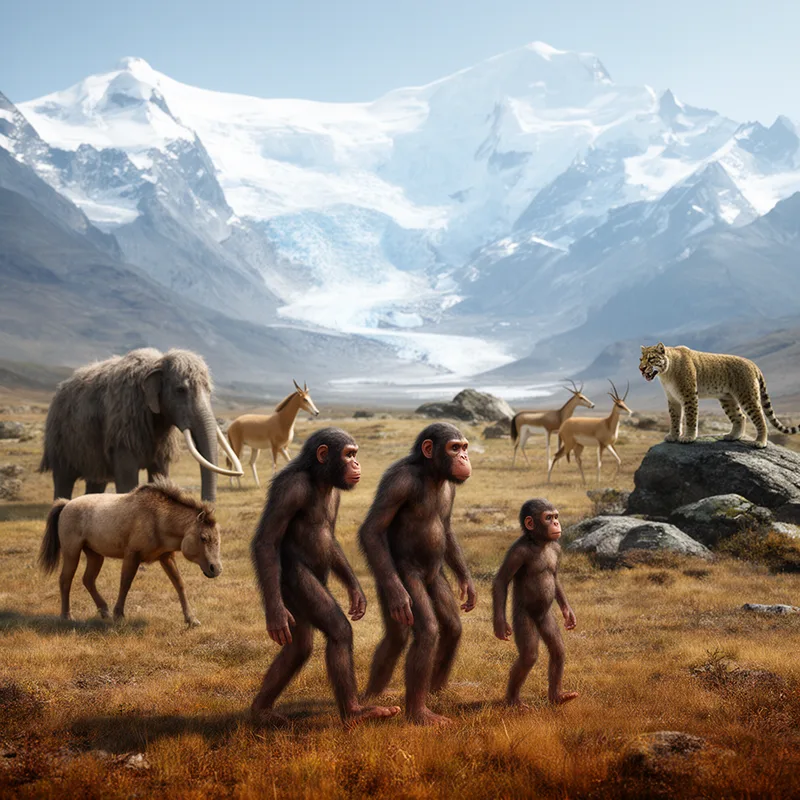
- These were some of the mammals we had in the Pliocene era, Sabre tooth tiger and the woolly mammoth.
Examples
-
This scale stands in stark contrast with that of the Earth, which had entered a Pliocene climate in half a millennium, as the narrator tells us right after the journal (187).
Academic text (2018) -
But it'd be worth reading a couple papers on the Pliocene to see to what extent they if you just Google Pliocene climate, you can quickly.
-
4. Back to the early Pliocene!
Blog text (33) -
Prepare to adapt to Pliocene-like conditions or warmer.
Blog text (34) -
There's the old Pliocene cliffs, but they're a long, long way from the coast now.
-
This phase lag is adjusted during the late Pliocene to early Pleistocene from 5 to 15 kyr from 3.0 to 1.5 to represent the increasing ice mass during this interval.
Academic text (2018) -
The team demonstrated that only a relatively small rise in atmospheric carbon dioxide (CO2) was associated with a period of substantial warming in the mid- and early-Pliocene era, between three to five million years ago, when temperatures were approximately 3 to 4 degrees Celsius warmer than they are today.
Blog text (4) -
They are not hiding out in literal islands, but inhabit ecological equivalents of islands—patches of the once great Pliocene savanna.
Academic text (1993) -
The discovery of new fossils in Idaho dates back to the Pliocene epoch, revealing significant insights into ancient ecosystems.
-
During the Pliocene, many new species of mammals emerged as the climate began to cool.
Synonyms

A period about 5.3 to 2.6 million years ago when the climate cooled, mountains rose, and mammals spread
Compounds
- Specialized
A period about 5.3 to 2.6 million years ago when the climate cooled, mountains rose, and mammals spread
How Old
- Specialized
1
9.9

- Specialized
- Specialized
- Specialized
1
9.9
- Specialized
1
9.9
- Specialized
1
9.9
- Specialized
1
9.1
Surface Forms
Morphology
Pliocene = plio + cene
The word is formed from technical combining forms (plio- + -cene) that are not standalone English words and whose meanings are specialized geological terms, so the composition is not predictable for an average learner.
Etymology
Pliocene comes from Greek roots plio- meaning 'more' and -cene from a word meaning 'new'. So Pliocene literally means 'more new' and is a way to remember it is the geologic time a little more recent than the Miocene, about 5.3 to 2.6 million years ago.