

Oligocene
- noun
- /ˈɑlɪɡoʊˌsiːn/
- Specialized
- The scientists discovered several fossils dating back to the Oligocene epoch, highlighting the emergence of modern mammals.
Examples
-
The Eocene-Oligocene Transition: Paradise Lost.
Blog text (33) -
That was all tropical rainforest, and the Oligocene was still there was still a huge area of tropics, and the Miocene still had pretty good tropics.
-
Actually, that theory about a slow reduction of CO2 in the atmosphere causing the rather abrupt cooling in the early Oligocene (with the first continental ice sheet in East Antarctica) is pretty shaky.
Blog text (15) -
During the Oligocene, significant climatic changes contributed to the diversification of many mammal species.
-
Excavations in the region revealed remains of large mammals from the Oligocene, showcasing the ecological shifts of that period.
Synonyms
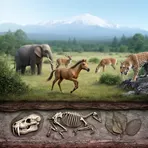
A time about 34 to 23 million years ago when the climate cooled and many modern mammals appeared
Compounds
- Specialized
A time about 34 to 23 million years ago when the climate cooled and many modern mammals appeared
How Old
- Specialized


 1
9.9
1
9.9

- Specialized
- Specialized
- Specialized
1
9.9
- Specialized
1
9.9
- Specialized
1
9.9
- Specialized
1
9.1
Surface Forms
Morphology
Oligocene = oligo + cene
Formed from specialized Greek combining forms (oligo- 'few' + -cene indicating an epoch); this technical naming is not derivable by an average B1 learner from common English vocabulary.
Etymology
Oligocene comes from Greek parts oligo- meaning 'few' (seen in oligarchy, 'rule by a few') and -cene from kainos meaning 'new'. A helpful way to remember it is 'few new' because it names a period when many modern mammals were just beginning to appear, so the name marks an early 'new' stage in Earth's history.