
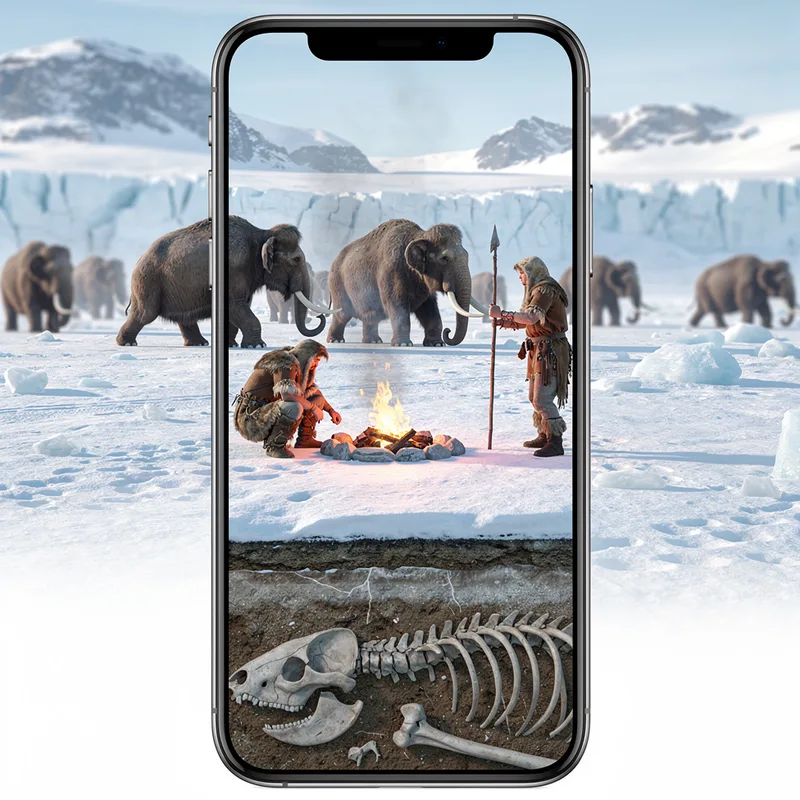
Pleistocene
 1
9.9
1
9.9

- noun
- /ˈplaɪstəˌsiːn/
- Specialized
- That would have allowed our Pleistocene ancestors to produce young that depended on many caretakers for a long time.
- Pleistocene ancestors
Loading YouTube…
Watch on YouTubeIf we make this planet, and if we make this planet geologically like the Pleistocene, it's not good for us.
- If we make this planet, and if we make this planet geologically like the Pleistocene, it's not good for us.
Examples
-
There are no radiocarbon dates yet, and no typical Chesrow tools have been found with the bones of extinct Pleistocene megafauna, so the jury's still out.
Academic text (2002) -
Late Pleistocene climate change and the global expansion of anatomically modern humans.
Blog text (14) -
Among our Pleistocene ancestors, infants with multiple caretakers would have been challenged in ways that no ape had ever been before.
Academic text (2009) -
Taken in this context, Gigantopithecus was no freakish monstrosity, but simply the primate example of a Pleistocene phenomenon.
Academic text (1991) -
The study of modern fast food cuisine probably reveals more about the basic human machinery of appetite than do studies of hunter-gatherer cuisine or archaeological data on the diets of our Pleistocene ancestors.
Academic text (1990) -
If we have anything to fear climatically, it is the pending return of the next Pleistocene glaciation, with two-mile-thick continental ice sheets and all that entails.
Blog text (33) -
Pleistocene fishermen and Neolithic gardeners sheltered in these caves, and in recent years, guerrillas hid from the Indonesian army in them.
Academic text (2003) -
There is also another finding at Qesem Cave bordering Rosh Ha'Ayin, which Tel Aviv University archeologists claim is about 400,000 years, the same as those of the Pleistocene Age.
Blog text (18) -
The Pleistocene epoch saw the rise of many species that would eventually lead to modern humans.
-
Fossils from the Pleistocene show a diverse range of animals that adapted to the changing climate.
Synonyms
A long period of Earth's history with ice ages and early humans
Compounds
How Old


Surface Forms
Morphology
Pleistocene = pleisto + cene
Formed from classical combining forms ('pleisto-' and '-cene') that are technical and not standalone English words, so the meaning is not transparent to an average B1 learner.
Etymology
Pleistocene comes from two Greek parts: pleisto- meaning 'most' and -cene from kainos meaning 'new'. So it means the 'most new' of the older geological times, which fits because the Pleistocene was the recent long Ice Age period when early humans and animals like the woolly mammoth lived.