
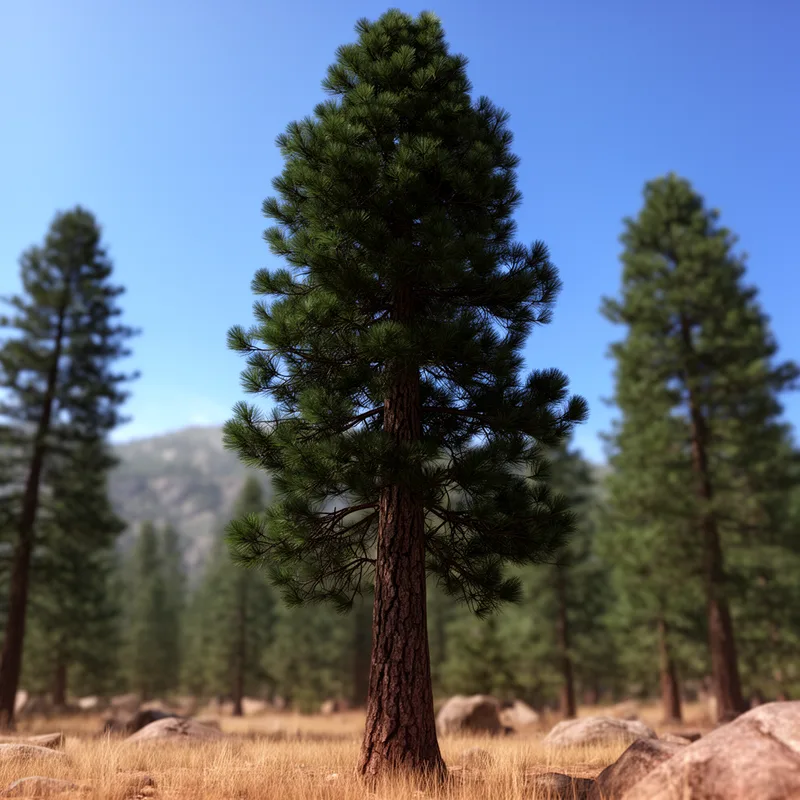
Pinus ponderosa
- noun
- /ˈpaɪnəs ˌpɒndəˈroʊzə/
- Specialized
- The Pinus ponderosa tree can grow up to 200 feet tall.
Examples
-
The Pinus ponderosa is one of the most important timber species in the western United States.
-
We spent our vacation hiking through a forest dominated by Pinus ponderosa.
-
Researchers are studying how Pinus ponderosa adapts to changes in climate.
-
Many Pinus ponderosas thrive in the mountainous regions of California.
-
The Pinus ponderosa tree can grow up to 200 feet tall, making it a remarkable sight in the forest.
-
We spent our vacation hiking through a forest dominated by Pinus ponderosa, where the tall trees provided ample shade.
-
The Pinus ponderosa is one of the most important timber species in the western United States, valued for its sturdy wood.
Synonyms
 2
8.9
2
8.9

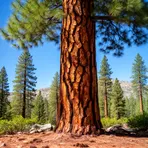
A large pine tree from western North America with thick, scaly bark
 2
6.8
2
6.8
A tall tree from western North America that has long green needles and thick dark bark
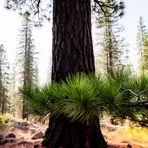
A tall pine tree with dark green needles in groups of two to five and thick dark bark when mature
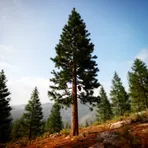
A tall pine tree from western North America with dark green needles
Surface Forms
Morphology
This is a Latin binomial formed from the genus name 'Pinus' and the specific epithet 'ponderosa', both of which directly point to a kind of pine tree; together they unambiguously denote a species of pine. Biological naming is a regular compositional pattern and, given the provided constituent meanings, a B1 learner who knows both parts would be able to infer that this refers to a particular tall pine species.
Etymology
Pinus ponderosa comes from Latin words: Pinus means 'pine' and ponderosa means 'heavy'. Early explorers used 'heavy pine' for these trees because they have very thick bark and large trunks, so the name helps you remember that this is a big, sturdy pine.