
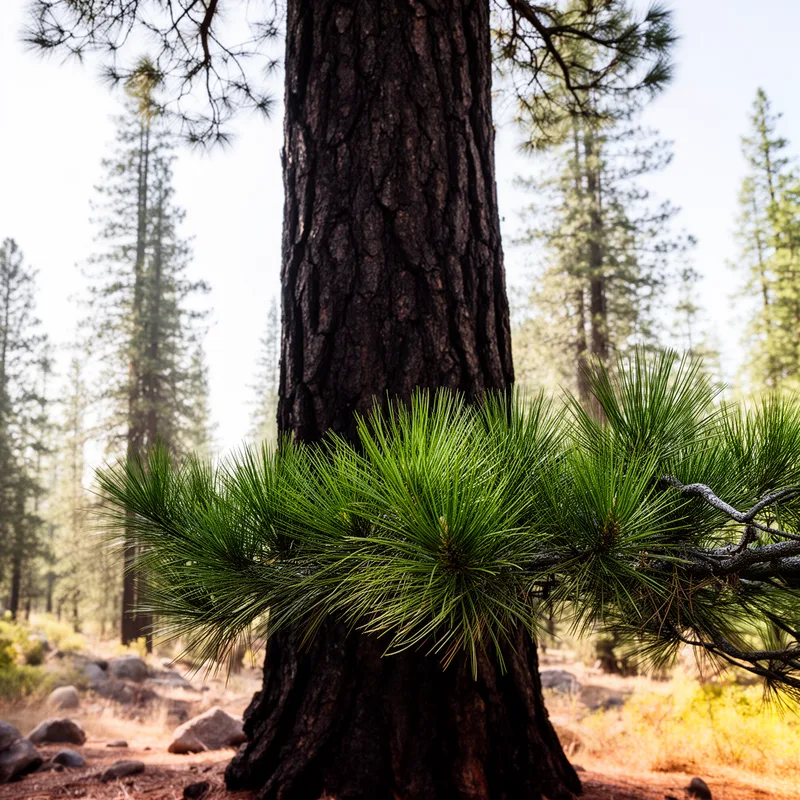
bull pine
- noun
- /bʊl paɪn/
- US
- The bull pine stood majestically on the hillside.
Examples
-
While hiking in the forest, I admired the tall bull pine with its dark green needles and thick bark.
-
Many bull pines can be found in the Rocky Mountains.
-
The bull pine is a prominent feature of forests in the American West.
-
The dark, thick bark of the mature bull pine helps protect it from wildfires.
-
We hiked through a grove filled with ancient bull pine towering above us.
-
The bull pine grew majestically among the other trees, providing shelter for various wildlife.
-
I noticed the distinct clusters of needles on the bull pine as I walked through the dense woods.
Synonyms
 2
8.9
2
8.9

A large pine tree from western North America with thick, scaly bark
 2
6.8
2
6.8
A tall tree from western North America that has long green needles and thick dark bark

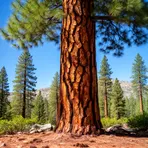
A tall pine tree from western North America with dark green needles in small groups and thick dark brown bark
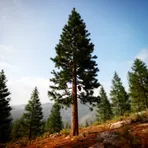
A tall pine tree from western North America with dark green needles
How Tall

Surface Forms
Morphology
bull + pine
The noun–noun compound is compositionally built: 'pine' is a tree and 'bull' (male bovine, suggesting size/robustness) functions as a modifier, so a learner can infer this is a kind of (large/tall) pine tree. This follows a common compounding pattern and does not require idiomatic knowledge, so a B1 learner who knows the constituents would likely understand the basic meaning.
Etymology
Bull pine may come from people comparing a very tall, strong pine to a male bull, because the tree looks big and powerful. So the name came to mean 'a very large pine tree'.