
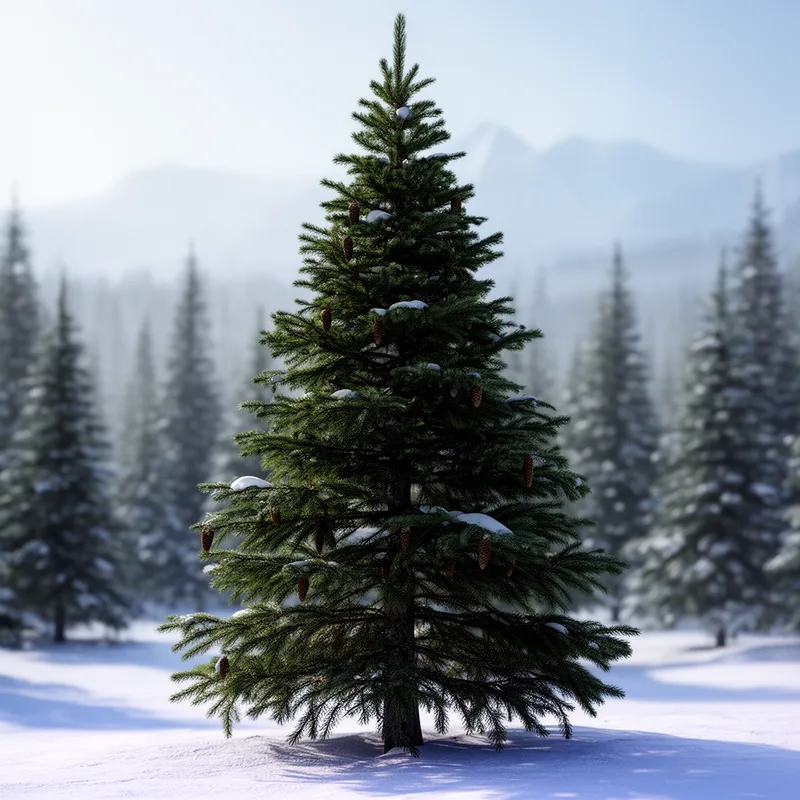
Picea
- noun
- /ˈpaɪsiə/
- Specialized
- In the northern forests, you can find various species of Picea, including the red spruce and the Sitka spruce.
- spruce (Picea)
Examples
-
The white spruce (Picea glauca) is a popular choice for landscaping due to its attractive shape and resilience.
-
Some 30 percent is forested, with Sitka spruce (Picea sitchensis) and western hemlock (Tsuga heterophylla) as the defining rain-forest association.
Academic text (1996) -
This one, this is a blue sky Serbian spruce, I think Picea Omarica.
-
Working in the field to re-evaluate past studies, Allister assessed the long-term effects of herbicides on forests with a particular focus on the white spruce (Picea glauca).
Academic text (2009) -
During winter, the branches of the blue spruce (Picea pungens) are often adorned with snow, creating a picturesque scene.
Synonyms

 19
3.5
19
3.5

A tall evergreen tree with needle-like leaves and cones found in northern regions
Compounds
- Specialized
A tall evergreen tree with a pyramid shape, dark green needles and long hanging cones

- Specialized
A medium-sized spruce tree with long hanging branches that grows in California and Oregon

- Specialized
A tall spruce tree with blue-green needles that grows in cold mountains
- Specialized
A tall spruce tree that grows in cold areas of northern Europe and Asia

- Specialized
An evergreen tree with blue green needles and a cone shape, commonly called blue spruce

- Specialized
A medium-sized spruce tree from eastern North America that people use for timber and paper

- Specialized
A large evergreen tree from northwest North America with sharp needles and light wood used to make instruments
Surface Forms
Etymology
Picea comes from Latin picea, which is linked to pix meaning 'pitch' or 'tar'. Spruces make sticky sap like pitch, so the name fits these evergreen trees.