
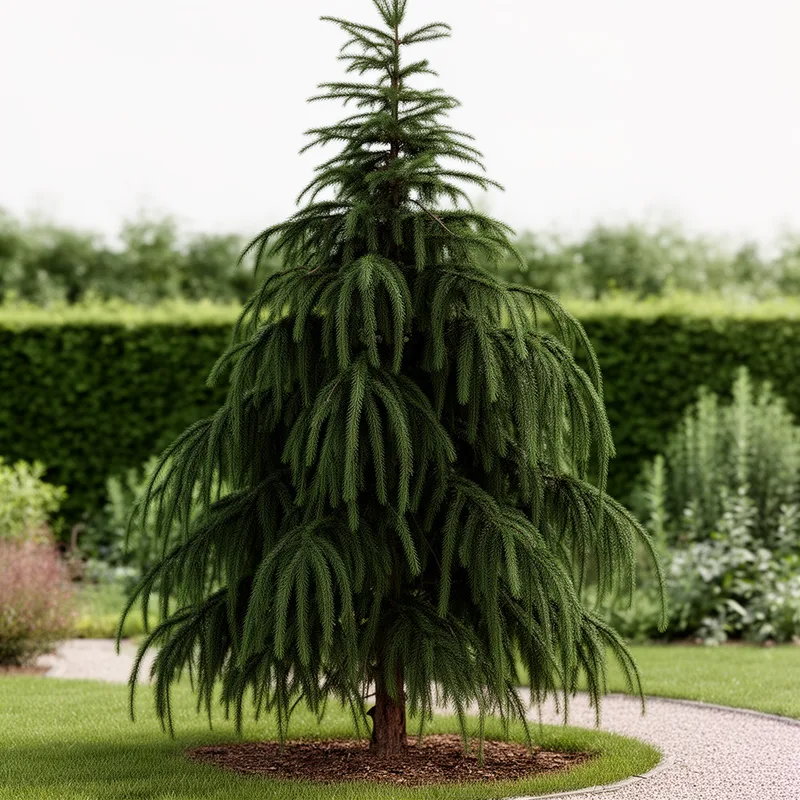
Picea orientalis
- noun
- Specialized
- The Picea orientalis is prized in gardens for its graceful, drooping branches.
Examples
-
We planted a Picea orientalis along the northern edge of the park for its year-round greenery.
-
Many landscapers admire Picea orientalis for its dense foliage and ornamental value.
-
The Picea orientalis is often used in landscaping.
-
Have you seen a Picea orientalis in bloom?
-
Many landscapers admire Picea orientalis for its dense foliage and ornamental value.
-
The Picea orientalis is prized in gardens for its graceful, drooping branches.
-
We planted a Picea orientalis along the northern edge of the park for its year-round greenery.
Synonyms

A tall evergreen tree with dark green needles and drooping branches often grown in gardens
Surface Forms
Morphology
Picea + orientalis
The name is a standard taxonomic binomial formed from a genus (Picea = spruces) plus an adjectival epithet (orientalis = 'eastern'/'of the east'), so a learner who knows both constituents can infer 'eastern spruce' or 'spruce from the east.' Botanical Latin binomials are compositionally transparent across languages and follow predictable naming logic, making the meaning derivable from the parts.
Etymology
Picea orientalis gets its name from Latin: Picea comes from an old word for 'pitch' meaning the tree's sticky resin and orientalis means 'eastern'. So the name gives a picture of a sticky evergreen from the east, which helps you remember this tree often used in gardens for its drooping branches.

