

oriental spruce
- noun
- Specialized
- We planted an oriental spruce in the backyard for its dense, dark green foliage.
Examples
-
The oriental spruce is prized by gardeners for its gracefully weeping branches.
-
Unlike other species, the oriental spruce thrives in colder climates and acidic soils.
-
The oriental spruce is known for its beautiful foliage.
-
Many gardeners choose the oriental spruce for its unique shape.
-
Gardeners often choose the oriental spruce for its attractive shape and foliage in ornamental gardens.
-
The landscape architect recommended planting an oriental spruce to bring a touch of greenery to the park.
-
In winter, the oriental spruce adds a beautiful display with its drooping branchlets covered in snow.
Synonyms
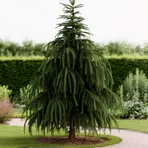
An evergreen tree with drooping branches often grown in gardens
Surface Forms
Morphology
The noun phrase is compositionally built from 'oriental' (of the East) + 'spruce' (a Picea tree), so its meaning as a spruce species from the Orient is directly inferable from the parts. A B1 learner who knows both words will understand this as an eastern/Asian type of spruce (used ornamentally), despite minor nuances in geographical labeling.
Etymology
The noun oriental spruce comes from the parts oriental and spruce, where oriental meant 'from the east' and spruce is an evergreen tree. People first used this name after finding a dark, drooping spruce in the eastern mountains, so the name tells you it's a spruce 'from the east' often grown for its graceful branches.

