

Old World hop hornbeam
- noun
- UK
- Gardeners appreciate the Old World hop hornbeam for its attractive bark and durable wood.
Examples
-
The leaves of the Old World hop hornbeam turn yellow in the autumn.
-
The Old World hop hornbeam is commonly found in forests across southern Europe.
-
The Old World hop hornbeam is known for its durability.
-
Many gardeners appreciate the Old World hop hornbeam for its ornamental value.
-
Gardeners appreciate the Old World hop hornbeam for its attractive bark and durable wood.
-
The Old World hop hornbeam is commonly found in forests across southern Europe.
-
Many gardeners value the Old World hop hornbeam for its ornamental use in landscapes.
Synonyms
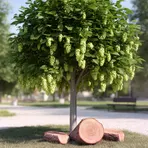
A medium-sized tree with very hard wood and small hanging fruit clusters

A small tree with flaky bark and fruit clusters like hops
Surface Forms
Morphology
The phrase combines familiar elements: 'Old World' signals a Eurasian origin and 'hornbeam' names a type of tree, while 'hop' modifies the species. A learner who knows those constituents can infer it is a kind of hornbeam native to the Old World (possibly with some relation to hops), but the specific botanical sense and the reason for the 'hop' modifier are lexicalized and not fully predictable without prior exposure.
Etymology
Old World hop hornbeam is a name that paints a simple picture: Old World means it comes from Europe and Asia, hop refers to its hanging seed clusters that look like the hops used in beer, and hornbeam points to its very hard wood, with 'horn' meaning 'hard' and 'beam' meaning 'tree'. So the name helps you remember both what the tree looks like and where it is from.

