

hop
 43
5.8
43
5.8

- noun
- /hɑp/
- Specialized
- The main ingredients for brewing beer include water, malt, yeast, and hops.
Loading YouTube…
Watch on YouTubeBut it makes sense, you know, because the hop plant has the same kind of flavor profile as does does, you know, marijuana, doesn't it?
- But it makes sense, you know, because the hop plant has the same kind of flavor profile as does does, you know, marijuana, doesn't it?
Examples
-
Only water I serve's got barley and hops in it!
-
But also the Holy Trinity of beer other than the water is barley, hops and yeast.
-
You know, I heard they recently decided to add more hops to it.
-
Apparently, they put the type of hop up to a vote, and Citra won out.
Blog text (13) -
Citra brings a much more powerful flavor than the type of hop we discussed last week, Jade.
Blog text (13) -
Access to the family farm to source hops, pumpkins, and maybe tomatoes.
Blog text (5) -
Clockwise from top: peanuts, corn, rice, coffee, soybean, hops, pistachio, and sorghum.
Academic text (2003) -
Many brewers are experimenting with different types of hops to create unique beer flavors.
-
To enhance the bitterness of the beer, the recipe requires a generous amount of hops.
Synonyms
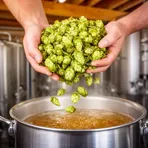
Dried flowers from a climbing plant used to give beer a bitter taste and smell

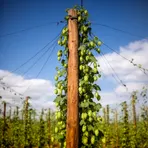
A climbing plant whose flowers give beer a bitter taste and smell

A climbing plant whose flowers brewers use to give beer a bitter taste

A European climbing plant whose flowers give beer a bitter taste

A climbing plant from Europe whose flowers are used to flavour beer
Compounds




A medium-sized tree with thin flaky bark and hop-like fruit groups found in eastern North America


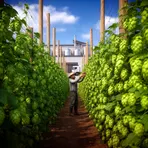
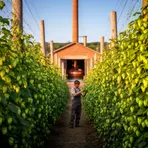



A track event where an athlete does a hop, a step, then a long jump in one run

- Jargon
A device in an airsoft gun that makes plastic BBs spin backwards to fly straighter and farther
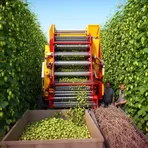
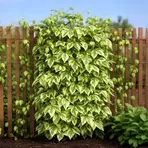


A medium-sized tree that loses its leaves in winter and has hard wood and attractive bark

Surface Forms
Etymology
Hop for the plant comes from a very old name for this climbing plant and it gave English the adjective hoppy. The dried cone-like flowers add a 'bitter' taste to beer, so thinking 'hoppy' helps you remember the plant's use in brewing.