

Melolontha melolontha
- noun
- Specialized
- The larvae of Melolontha melolontha can cause serious damage to grass roots.
Examples
-
Several plants were destroyed by an infestation of Melolontha melolontha last year.
-
The Melolontha melolontha is often seen in gardens during spring.
-
Gardeners often struggle to control Melolontha melolontha populations in the spring.
-
Farmers worry about the Melolontha melolontha damaging their crops.
-
Gardeners often struggle to control Melolontha melolontha populations in the spring.
-
Farmers worry about the Melolontha melolontha damaging their crops.
-
The larvae of Melolontha melolontha can cause serious damage to grass roots.
Synonyms

 1
9.9
1
9.9

A large beetle that makes a loud buzzing sound when it flies
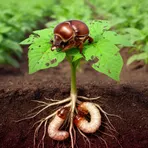
A large brown beetle that eats plant leaves and whose young eat roots

A large brown beetle that eats plant roots and leaves

A brown beetle like a May bug that often damages plants
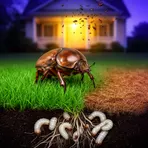
A large beetle that appears in late spring whose larvae eat plant roots and can damage lawns

A large brown beetle that appears in late spring and whose young eat plant roots

A beetle whose young eat plant roots and can damage lawns
Surface Forms
Morphology
This is a standard Latin binomial (genus + specific epithet). If a learner knows 'Melolontha' as a genus of beetles, the combined form signals a particular species of that genus, so the overall meaning (a type of beetle) is directly derivable. Scientific names follow a cross-linguistically regular compositional pattern, making this transparent to learners who know the constituents.
Etymology
Melolontha melolontha takes its name from an old Greek word for a beetle, and scientists used the same word, Melolontha, twice to show it is the main kind. That repeating name is like saying 'beetle beetle', so the name points to the common European beetle called the 'cockchafer'.