

Melissa officinalis
- noun
- /məˈlɪsə ˌɒfɪˈsɪnəlɪs/
- Specialized
- The leaves of Melissa officinalis can be used fresh or dried in various culinary dishes.
Examples
-
I planted Melissa officinalis in my garden last spring.
-
Gardeners love growing Melissa officinalis because its lemony scent attracts bees.
-
Melissa officinalis is often used in herbal teas for its calming properties.
-
Have you ever tried using Melissa officinalis for tea?
-
The leaves of Melissa officinalis can be crushed to release a refreshing lemon scent.
-
Many gardeners grow Melissa officinalis due to its attractive flowers and pleasant fragrance.
-
Some herbalists use Melissa officinalis as a natural remedy for anxiety and stress.
Synonyms

 1
3.0
1
3.0

A herb with lemon-scented leaves used in cooking and teas

A bushy herb in the mint family with lemon-scented leaves, also called lemon balm
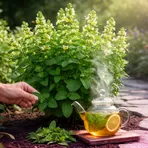
A bushy plant with lemon-scented leaves and small white or yellow flowers that people use in teas

A low-growing herb with lemon-scented leaves used to make calming tea
Surface Forms
Morphology
The name is a standard botanical Latin binomial where 'Melissa' identifies the herb genus (including lemon balm) and 'officinalis' signals a species with traditional medicinal use, so a learner who knows those constituent meanings can infer it denotes the medicinal lemon-balm plant. Botanical Latin names follow predictable composition rules and are used cross-linguistically, which supports transparency for learners familiar with the parts.
Etymology
Melissa officinalis comes from two old words: Melissa meaning 'bee' because the plant's lemon smell attracts bees, and officinalis meaning 'used in medicine'. So the name gives a simple picture: a lemon-scented herb that bees love and people use for healing.