

field balm
- noun
- /fiːld bɑːlm/
- UK
- Many gardeners grow field balm for its lemon-scented leaves.
Examples
-
The tea made from field balm is said to have calming effects.
-
She planted field balm along the border of her herb garden.
-
I love the smell of field balm in the garden.
-
Look at that field balm!
-
Many gardeners grow field balm for its lemon-scented leaves.
-
She planted field balm along the border of her herb garden.
-
The tea made from field balm is said to have calming effects.
Synonyms
 1
3.0
1
3.0

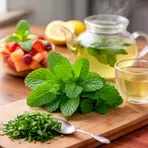
A herb with lemon-scented leaves used in cooking and teas

A lemon-scented herb used in teas and cooking, also called lemon balm
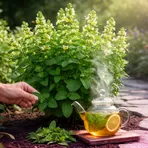
A bushy plant with lemon-scented leaves and small white or yellow flowers that people use in teas

A bushy herb in the mint family with lemon-scented leaves, also called lemon balm
Surface Forms
Morphology
The compound 'field balm' can be directly understood as a balm-like (aromatic) plant associated with a field: a B1 learner who knows 'field' and 'balm' would infer a plant/herb from fields with soothing/aromatic qualities. This follows a common noun+noun pattern for plant names (e.g. 'lemon balm', 'field ...') and is cross-linguistically plausible, so the meaning is immediately accessible from the constituents.
Etymology
Field balm may come from the plant's lemon scent and its use for comfort: balm means a 'soothing herb' and field shows it grows in open ground or gardens, so the name points to a lemon-scented herb used for calming teas.