

Gnetophytina
- noun
- Specialized
- Gnetophytina are considered an important evolutionary link between conifers and angiosperms.
Examples
-
Some botanists include Ephedra and Welwitschia in the subclass Gnetophytina.
-
The Gnetophytina group includes unique plants like Gnetum and Welwitschia.
-
Scientists are debating the exact classification of Gnetophytina within the plant kingdom.
-
Are Gnetophytina really a bridge between conifers and angiosperms?
-
Gnetophytina are a crucial link in understanding the evolution from conifers to flowering plants.
-
Researchers focus on Gnetophytina to study the transition between gymnosperms and angiosperms.
-
The characteristics of Gnetophytina highlight their role in the evolutionary history of plants.
Synonyms

A small group of seed plants such as Ephedra and Welwitschia that help scientists study how plants changed over time

A group of seed plants that have traits of conifers and flowering plants
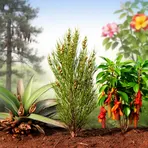
A group of seed plants with features like both conifers and flowering plants
Surface Forms
Morphology
Gnetophytina = Gnetophyta (opaque) = Gnetophyta + ina
The formation uses technical Latin taxonomic morphology (Gnetophyta + -ina) and requires specialist botanical knowledge, so learners cannot derive the meaning from components.
Etymology
Gnetophytina comes from the plant name Gnetum plus the ending -phyta, which means 'plants', and -ina, a marker for a subgroup. So Gnetophytina literally means 'Gnetum-like plants', which helps explain why the name is used for a small group of seed plants thought to be a link between conifers and flowering plants.

