

Gnetopsida
- noun
- /ˌnɛtəˈsɪdə/
- Specialized
- The Gnetopsida class includes unique plants like Ephedra.
Examples
-
Some botanists argue that Gnetopsida represent an important transitional form between conifers and flowering plants.
-
The differences in vessel structure make Gnetopsida distinct from other gymnosperms.
-
Gnetopsida are a unique group of seed plants that have long puzzled botanists regarding their evolutionary relationships.
-
Are Gnetopsida the missing link in plant evolution?
-
Gnetopsida are a unique group of seed plants that have long puzzled botanists regarding their evolutionary relationships.
-
Some botanists argue that Gnetopsida represent an important transitional form between conifers and flowering plants.
-
The differences in vessel structure make Gnetopsida distinct from other gymnosperms.
Synonyms
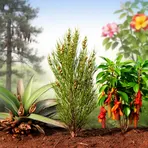
A group of seed plants with features like both conifers and flowering plants

A small group of seed plants such as Ephedra and Welwitschia that help scientists study how plants changed over time

A group of cone-bearing plants that some scientists see as a link between conifers and flowering plants
Compounds
- Specialized
A group of seed plants with features like both conifers and flowering plants
Surface Forms
Etymology
Gnetopsida comes from the plant name Gnetum and the class ending -opsida, meaning 'a class of plants'. So Gnetopsida is the name for the group of seed plants that includes Gnetum and related plants, and that is why scientists use it for this group seen as a link between conifers and flowering plants.

