

Gnetophyta
- noun
- /ˈnɛtəˌfaɪtə/
- Specialized
- The Gnetophyta include unusual gymnosperms like Ephedra and Welwitschia.
Examples
-
Did you know that Gnetophyta includes species like Ephedra and Welwitschia?
-
The Gnetophyta are fascinating plants that bridge the gap between conifers and flowering plants.
-
Only a few living species of Gnetophyta exist today, making them a rare group.
-
Scientists study Gnetophyta to better understand plant evolution and diversity.
-
The Gnetophyta are fascinating plants that bridge the gap between conifers and flowering plants.
-
Scientists study Gnetophyta to better understand plant evolution and diversity.
-
Did you know that Gnetophyta includes species like Ephedra and Welwitschia?
Synonyms
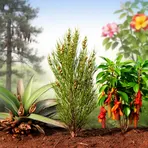
A group of seed plants with features like both conifers and flowering plants

A group of seed plants that have traits of conifers and flowering plants

A group of cone-bearing plants that some scientists see as a link between conifers and flowering plants
Surface Forms
Morphology
Gnetophyta = Gnetum (opaque) = gnet + phyta
The form is analyzable into a genus name + the scientific combining suffix '-phyta', but the meaning requires specialized botanical knowledge and is not predictable for an average learner.
Etymology
Gnetophyta comes from the plant-name Gnetum and the suffix -phyta, which means 'plants'. So, Gnetophyta literally means 'Gnetum plants', and that is why it is the name for the small, rare group of seed plants that sit between cone-bearing trees and flowering plants.

