

class Gnetopsida
- proper noun
- Specialized
- Welwitschia is a remarkable member of class Gnetopsida found in the deserts of Africa.
Examples
-
Species within the class Gnetopsida display a number of unusual reproductive features.
-
Scientists debate whether class Gnetopsida is more closely related to conifers or angiosperms.
-
The class Gnetopsida is fascinating.
-
Look at the class Gnetopsida!
-
Scientists debate whether class Gnetopsida is more closely related to conifers or angiosperms.
-
Species within the class Gnetopsida display a number of unusual reproductive features.
-
Welwitschia is a remarkable member of class Gnetopsida found in the deserts of Africa.
Synonyms
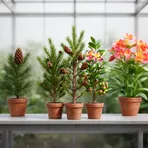
A group of seed plants that have traits of conifers and flowering plants

A small group of seed plants such as Ephedra and Welwitschia that help scientists study how plants changed over time

A group of cone-bearing plants that some scientists see as a link between conifers and flowering plants
Surface Forms
Morphology
This is a straightforward taxonomic label combining the noun 'class' (a category/rank) with the proper name 'Gnetopsida' (a group of plants); if a learner knows both constituents, the meaning — the class named Gnetopsida — is directly compositional. The rank+name pattern is common across languages and scientific nomenclature, so the sense is transparent to learners who know the parts.
Etymology
Class Gnetopsida comes from the plant name Gnetum plus the ending -opsida, which means 'a class' or 'group' of plants. So the name tells you this is the plant class built around Gnetum, thought to sit between cone-bearing trees and flowering plants.

