

Gaussian shape
- noun
- /ˈɡaʊsɪən ʃeɪp/
- Specialized
- In statistics, a Gaussian shape is often used to model the distribution of random variables.
Examples
-
The data showed a clear Gaussian shape, indicating that most values were clustered around the mean.
-
Previous theories assumed that at the transition point between a liquid and glass, the material's atoms become caged by each other in a "simple" Gaussian shape.
Blog text (19) -
The results of the experiment followed a Gaussian shape, which was expected for normally distributed data.
Synonyms

 7
4.6
7
4.6

A curved line on a graph showing most results near the average and fewer at the ends
 2
5.8
2
5.8
A bell-shaped curve where most values are near the average
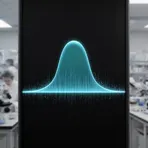 1
7.5
1
7.5
A bell-shaped curve used in statistics to show how values spread


 1
4.2
1
4.2
A curve shaped like a bell that shows most values near the average
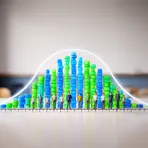 1
6.7
1
6.7
A bell-shaped pattern that shows most values are near the average, like heights or test scores

A bell-shaped curve the same on both sides that shows how values are near the average

A bell-shaped line that shows most numbers near the middle and fewer far from it
How Smooth
- Specialized
1
8.2

- Specialized
- Specialized
- Specialized
1
5.5
- Specialized
106
4.8
- Specialized
21
3.5
Surface Forms
Morphology
The phrase is compositional (adjective + noun) and signals a subtype of shape, but the key term 'Gaussian' is a technical label referring to Gauss's normal distribution (a bell-shaped curve). A B1 learner who knows the everyday sense of 'shape' but not the statistical meaning of 'Gaussian' would not be able to derive the specific bell-curve meaning, so the relation is only partially transparent and depends on specialist knowledge.
Etymology
Gaussian shape comes from the smooth bell curve studied by the mathematician Carl Friedrich Gauss. Picture a bell that rises in the middle and falls evenly on both sides, and you can see why the phrase describes data that are 'grouped around an average'.