

Gaussian curve
- noun
- /ˈɡaʊsɪən kɜrv/
- Specialized
- Many natural phenomena, such as heights and test scores, tend to approximate a Gaussian curve.
Examples
-
The data, when plotted, closely followed a Gaussian curve centered around the mean value.
-
After analysis, the experiment's results produced a nearly perfect Gaussian curve on the graph.
-
The Gaussian curve is fundamental in statistics.
-
Many data sets follow a Gaussian curve closely.
-
After analysis, the experiment's results produced a nearly perfect Gaussian curve on the graph.
-
Many natural phenomena, such as heights and test scores, tend to approximate a Gaussian curve.
-
The data, when plotted, closely followed a Gaussian curve centered around the mean value.
Synonyms

 7
4.6
7
4.6

A curved line on a graph showing most results near the average and fewer at the ends
 2
5.8
2
5.8
A bell-shaped curve where most values are near the average
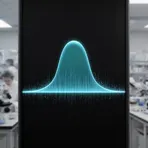 1
7.5
1
7.5
A bell-shaped curve used in statistics to show how values spread


 1
4.2
1
4.2
A curve shaped like a bell that shows most values near the average
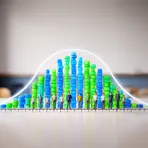 1
6.7
1
6.7
A bell-shaped pattern that shows most values are near the average, like heights or test scores
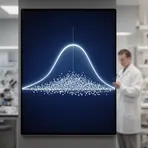
A smooth bell-shaped curve that shows how values spread around the average

A bell-shaped line that shows most numbers near the middle and fewer far from it
Surface Forms
Morphology
The adjective 'Gaussian' is an eponym referring to the mathematician Gauss and does not, by itself, convey the notion of a bell-shaped or normally distributed curve; 'curve' is a generic shape term. Understanding that a 'Gaussian curve' means the symmetric bell-shaped normal distribution requires specific statistical knowledge, so a B1 learner who only knows the literal constituents would not reliably derive the technical meaning.
Etymology
Gaussian curve is named after the mathematician Carl Friedrich Gauss. It refers to a smooth, bell-shaped curve on a graph where most values sit near the middle, so the name helps you remember the common pattern many things follow.