
Cirsium eriophorum
- noun
- Specialized
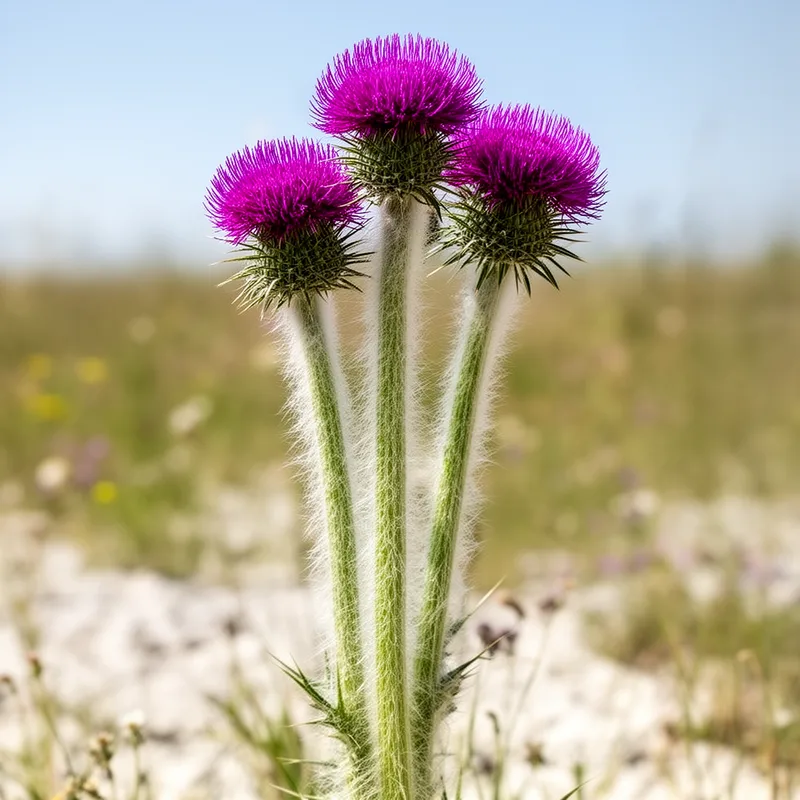
- The Cirsium eriophorum stands out in the meadow with its dense, woolly stems and vibrant purple blooms.
Examples
-
Botanists observed Cirsium eriophorum thriving in the chalky soils of the Balkan Peninsula.
-
Due to its striking appearance, Cirsium eriophorum is often noted by wildflower enthusiasts across Europe.
-
The Cirsium eriophorum thrives in sunny meadows.
-
Have you seen the Cirsium eriophorum in bloom?
-
Botanists observed Cirsium eriophorum thriving in the chalky soils of the Balkan Peninsula.
-
Due to its striking appearance, Cirsium eriophorum is often noted by wildflower enthusiasts across Europe.
-
The Cirsium eriophorum stands out in the meadow with its dense, woolly stems and vibrant purple blooms.
Synonyms

A tall thistle with soft white hairs that grows in parts of Europe
A prickly plant with pale purple flowers and hairy white stems and leaves
Surface Forms
Morphology
Both constituent names refer to plants with fluffy or woolly seed heads and one (Cirsium) is a thistle, so a learner who knows those meanings could plausibly infer this is a thistle species with woolly/fluffy features. However, this is a technical Latin binomial (specialist botanical naming) and the species-specific sense and naming convention are specialized, so the meaning is not fully predictable for an average B1 learner.
Etymology
Cirsium eriophorum may come from old Greek words: Cirsium was a word for 'thistle' and eriophorum joins erio- ('wool') and -phorum ('bearer'), giving the image of a 'wool-bearing thistle' with fuzzy stems and round purple flowers. That's why the name fits the tall 'woolly thistle' we see in meadows.

